
Wellness • Urinary health • Prevention
How to Prevent UTI: Proven Steps to Stop Repeat Infections
A urinary tract infection is painful, and having one after another is exhausting. The good news is that several simple steps are backed by solid research. Here is what works and what does not.
See Tarsul Capsules and Powder →
Key points
- Drinking more water cut repeat bladder infections roughly in half in women who drank little.
- Urinate after sex, choose showers over baths, and avoid spermicides and douches.
- Cranberry products reduce repeat UTIs in some groups, but do not treat an active infection.
- D-mannose did not prevent UTIs in a large 2024 trial.
- For frequent infections, methenamine, vaginal estrogen after menopause, or preventive antibiotics may help.
This page is general information, written by our founder. It is not medical advice.
What a UTI Is
A urinary tract infection happens when bacteria, usually from the bowel, get into the urinary tract. Most are bladder infections. Symptoms include pain or burning when you urinate, needing to go often, feeling the need to go with an empty bladder, bloody urine, and pressure or cramping in the lower belly (CDC). Fever, chills, nausea, and pain in the side or lower back can mean the infection has reached the kidneys, which needs prompt care.
UTIs are more common in women, because the urethra is shorter and closer to the rectum. Sex, menopause, spermicides, pregnancy, a previous UTI, and problems such as an enlarged prostate raise the risk (CDC). Doctors call it recurrent UTI when you have two or more infections in six months, or three or more in a year (review of UTI guidelines).
Everyday Habits That Prevent UTIs
Drink More Water
Water dilutes urine and helps flush bacteria out before they can settle in. In a year-long trial of 140 premenopausal women with frequent bladder infections who drank less than 1.5 liters of fluid a day, those who added 1.5 liters of water daily averaged 1.7 infections, compared with 3.2 in women who did not. They also needed about half as many antibiotic courses (Hooton et al., JAMA Internal Medicine, 2018). The American Urological Association now recommends more water for people who drink less than 1.5 liters a day (AUA News).
Urinate After Sex
Sexual activity can push bacteria toward the urethra. Urinating soon after sex helps flush them out (CDC). A UTI is not a sexually transmitted infection, but sex is one of the most common triggers.
Skip Irritating Products
Spermicides and menopause can change the healthy bacteria in the vagina and raise UTI risk. CDC suggests taking showers instead of baths and limiting douches, sprays, and powders in the genital area (CDC). If you use spermicide for birth control and get frequent infections, ask about other options.
Wipe Front to Back
Wiping from front to back after using the toilet keeps bowel bacteria away from the urethra. CDC recommends teaching this to girls during potty training (CDC).
Cranberry: What the Research Shows
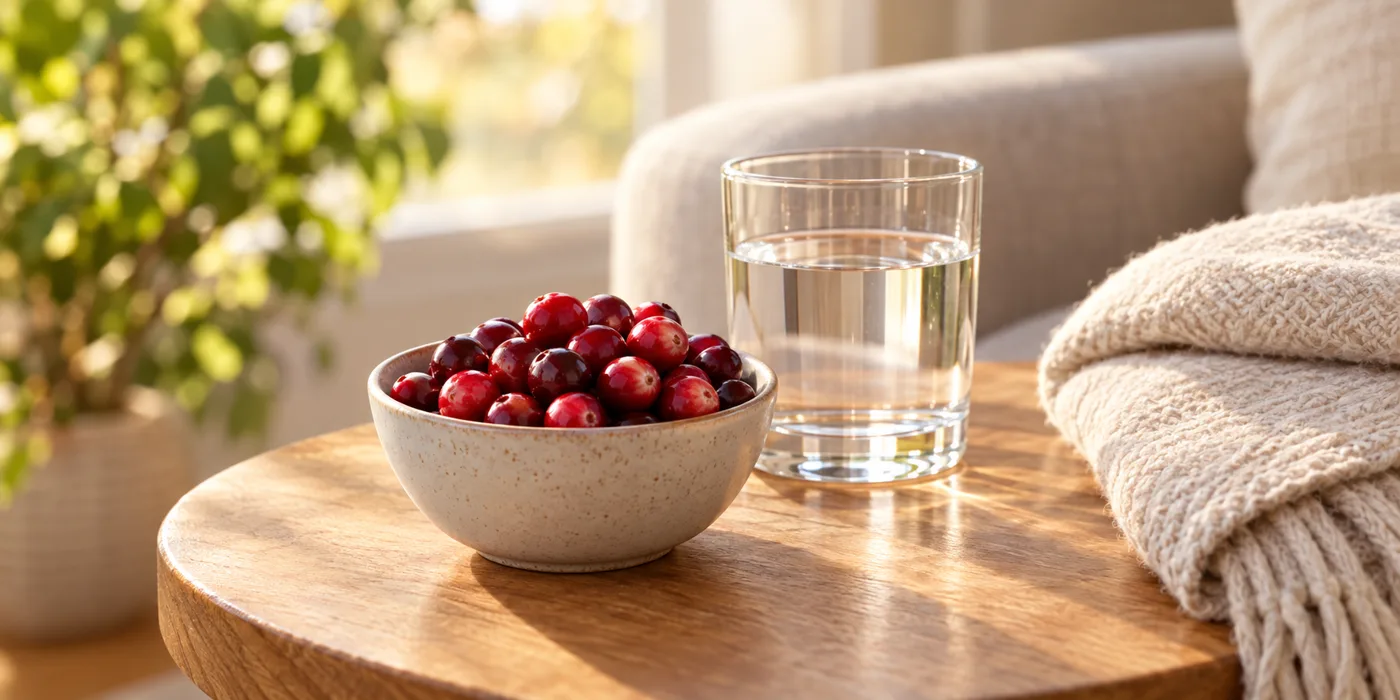
Cranberries contain compounds called proanthocyanidins, or PACs, which may keep bacteria from sticking to the bladder wall. A 2023 Cochrane review of 50 trials with nearly 8,900 people found that cranberry products reduced the risk of symptomatic UTIs by about 30 percent overall (Cochrane review, 2023). The benefit was clearest in:
- Women with recurrent UTIs, by about 26 percent
- Children, by about half
- People at risk after a medical procedure, such as bladder radiation
The review did not find a clear benefit for older adults in care homes, pregnant women, or people who have trouble emptying the bladder (Cochrane review, 2023). The American Urological Association says clinicians should offer cranberry as a prevention option for women with recurrent UTIs (American Urological Association). Cranberry is generally safe, though very large amounts can upset the stomach. It is not a treatment for an active infection (NCCIH).
D-Mannose and Other Supplements
D-mannose is a sugar that is sold as a supplement for urinary health. In 2024, a large double-blind trial in 99 primary care practices gave 598 women with recurrent UTIs either 2 grams of D-mannose or a placebo each day for six months. About 51 percent of the D-mannose group had another UTI, compared with about 56 percent of the placebo group, a difference that was not meaningful. The authors concluded that D-mannose should not be recommended to prevent UTIs in this group (Hayward et al., JAMA Internal Medicine, 2024). The American Urological Association now tells clinicians to inform patients that D-mannose alone may not be effective (American Urological Association).
Probiotics, vitamin C, and herbal products are also sold for UTI prevention, but the urology guideline says the evidence is not strong enough to recommend other non-antibiotic options yet (AUA News).
Medical Options for Repeat Infections
If you keep getting UTIs despite good habits, a health care professional can confirm each infection with a urine culture and talk through these options (American Urological Association):
- Vaginal estrogen: for women around or after menopause, vaginal estrogen restores healthy vaginal bacteria and lowers UTI risk. The urology guideline recommends it unless there is a reason not to use it.
- Methenamine hippurate: a prescription pill that makes the urine less friendly to bacteria. It is not an antibiotic, and in a 2021 study it worked about as well as a low-dose antibiotic (AUA News).
- Preventive antibiotics: a low daily dose, or a single dose after sex, after discussing the benefits and risks.
Antibiotics are the treatment for an active UTI. Take every dose as prescribed, and do not save leftovers for later (CDC).
A Note from Russ, Our Founder
In 2008 I was looking for answers to a health problem of my own, and I found an old pairing of sulfur and cream of tartar. I started Tarsul in 2010 so other people could use that simple two-ingredient mix without guessing at amounts.
People sometimes ask whether sulfur can help with UTIs. I do not make that claim, and there is no research showing it. Repeat infections are miserable, and they deserve real attention. The steps on this page have the best evidence, and a good health care professional can help you put them together.
When to See a Doctor
See a health care professional if you have UTI symptoms, or if any symptom is severe or worrying (CDC). Get care right away if you have:
- Fever, chills, nausea, or vomiting
- Pain in your side or lower back
- Symptoms that do not improve after starting antibiotics, or that get worse
- A UTI during pregnancy
- A baby younger than 3 months with a fever of 100.4°F (38°C) or higher
About Tarsul’s ingredients. Because Tarsul’s main ingredient is high in potassium, please talk with your doctor before using Tarsul if you have kidney problems or take medicines that raise potassium, such as some blood pressure pills or potassium-sparing water pills (NIH Office of Dietary Supplements). Swallowing large amounts of cream of tartar has caused dangerously high potassium levels (Medical Journal of Australia, 2025). Details are on our ingredient safety page.
Frequently Asked Questions
What is the best way to stop getting UTIs?
Drink plenty of water, urinate after sex, and avoid spermicides. For women with repeat infections, cranberry products, methenamine, and, after menopause, vaginal estrogen have good evidence. A health care professional can help build a plan.
Does cranberry juice prevent UTIs?
Cranberry products reduced repeat UTIs in women with recurrent infections, children, and people at risk after medical procedures in a 2023 Cochrane review of 50 trials. Cranberry does not treat an active infection.
Does D-mannose prevent UTIs?
A large 2024 trial of 598 women found that daily D-mannose did not reduce repeat UTIs compared with placebo. The American Urological Association says D-mannose alone may not be effective.
Can a UTI go away on its own?
Do not wait it out. Antibiotics are the standard treatment for a UTI. See a health care professional if you have symptoms, because an untreated infection can spread to the kidneys.
Does sulfur or Tarsul prevent UTIs?
No. We do not claim that Tarsul or sulfur prevents or treats UTIs. There are no studies showing that it does. Use the proven steps on this page and see a health care professional for infections.
How much water should I drink to prevent UTIs?
In one trial, women who drank less than 1.5 liters of fluid a day added 1.5 liters of water daily and had about half as many bladder infections over a year.
Tarsul and Your Daily Routine
Tarsul is two ingredients, cream of tartar and MSM, with no proprietary blend, made in San Diego since 2010. Read about our main ingredient and MSM, see dosage and ingredients, or see Tarsul capsules and powder.
Have a Question? Ask Us
Search our guides, or send us a note. A real person at Tarsul reads every message.
Sources
CDC. Urinary tract infection basics.
Williams G, et al. Cranberries for preventing urinary tract infections. Cochrane Database Syst Rev. 2023;4:CD001321.
NCCIH. Cranberry: usefulness and safety.
Hooton TM, et al. Effect of increased daily water intake in premenopausal women with recurrent urinary tract infections. JAMA Intern Med. 2018;178(11):1509-1515.
Hayward G, et al. D-mannose for prevention of recurrent urinary tract infection among women. JAMA Intern Med. 2024;184(6):619-628.
American Urological Association. Recurrent uncomplicated urinary tract infections in women: AUA/CUA/SUFU guideline and 2025 guideline updates.
Guideline of guidelines: management of recurrent urinary tract infections in women. PMC9790742.
NIH Office of Dietary Supplements. Potassium fact sheet for health professionals.
Hyperkalaemic cardiac arrest due to cream of tartar ingestion. Med J Aust. 2025;222(11).
About this page — last reviewed October 2026
Written by Russ Guillemot, founder of Tarsul. Tarsul is a family-run dietary supplement company in San Diego, California, selling since 2010. We are not physicians, and nothing on this page is a diagnosis or a treatment plan. Where we cite research, we link to it so you can read it yourself.
Tarsul · 2307 Fenton Parkway #107-42, San Diego, CA 92108 · 619-500-4403 · info@tarsul.com
These statements have not been evaluated by the Food and Drug Administration. This product is not intended to diagnose, treat, cure, or prevent any disease.