
Digestion • Regularity • Evidence
Supplements for Constipation: What the Evidence Supports, and Where Cream of Tartar Fits
Occasional constipation is uncomfortable, common, and usually very fixable. Here is a calm, sourced look at which supplements for constipation have real evidence, how they differ, and how to use them safely.
See Tarsul Capsules and Powder →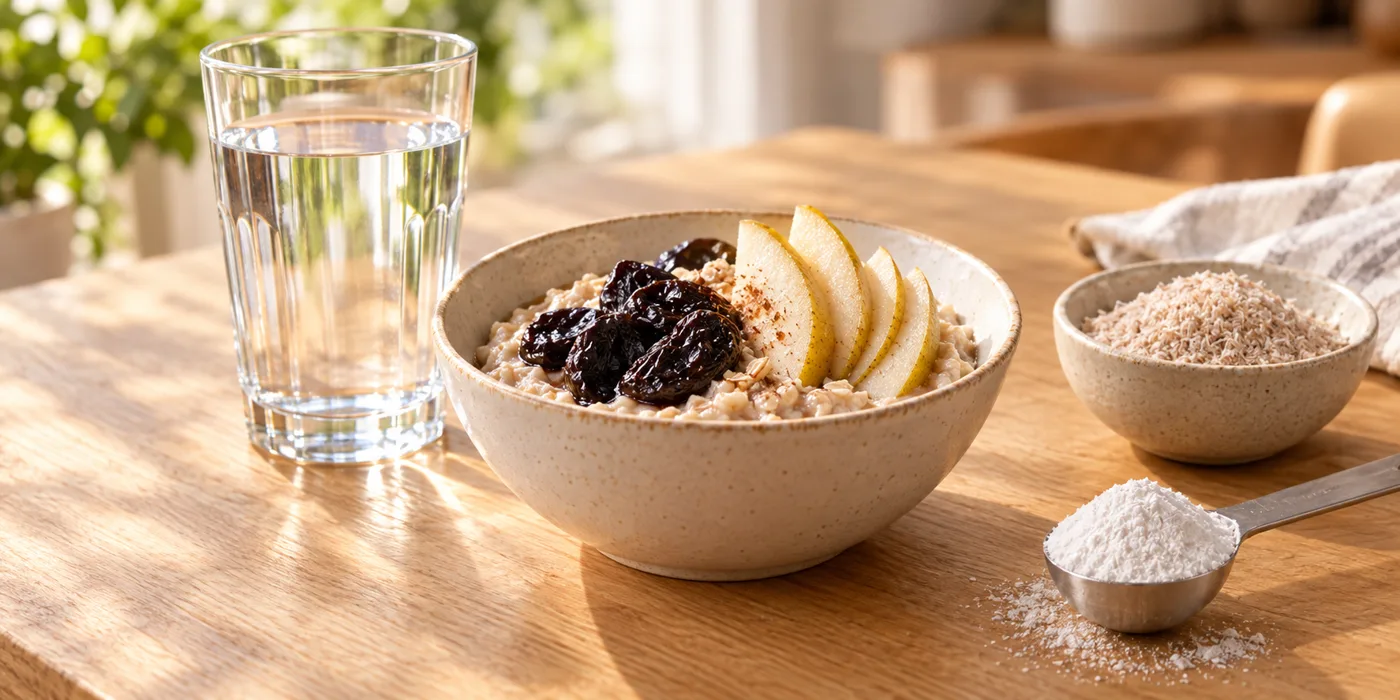
Key points
- Fiber, water, and movement are the foundation for regular bowel movements, and they come before any supplement.
- Among supplements for constipation, fiber (such as psyllium), magnesium oxide, and senna have the most evidence. Polyethylene glycol, an over-the-counter laxative, has the strongest.
- Cream of tartar has a long history as a gentle laxative, and one small study found it softened stools. It is promising but lightly studied.
- Very low potassium can slow the bowel, but most constipation is not caused by low potassium.
- Blood in the stool, unexplained weight loss, or a change that lasts weeks needs a doctor, not a supplement.
This page is general information, written by our founder. It is not medical advice, a diagnosis, or a plan of care.
What Counts as Constipation?
Constipation usually means having fewer than three bowel movements a week, or stools that are hard, dry, or difficult and painful to pass (NIDDK). Almost everyone has it now and then. Travel, a change in routine, less water, less movement, a low-fiber week, and some medicines are common reasons.
Occasional constipation is a different thing from constipation that lasts for months. The second kind, which doctors call chronic constipation, deserves a medical check, because a doctor can look for causes such as medicines, thyroid problems, or other conditions, and can prescribe treatments that supplements cannot match.
Most people searching for supplements for constipation are dealing with the first kind, and are looking for something gentle that helps the body do what it already knows how to do. That is the focus of this page.
Supplements for Constipation, Compared
In 2023, the American Gastroenterological Association and the American College of Gastroenterology published a joint guideline on over-the-counter and prescription treatments for chronic constipation (Chang et al., 2023). It was the first major guideline to recommend magnesium oxide and senna as evidence-based options (AGA press release). It is the most useful map we have, even for occasional constipation.
| Option | How it works | What the evidence says | Good to know |
|---|---|---|---|
| Fiber (psyllium, inulin, bran) | Adds bulk and holds water in the stool | Conditional recommendation, low certainty (2023 guideline) | Increase slowly and drink more water, or it can cause gas and bloating |
| Polyethylene glycol (PEG) | Draws water into the bowel (osmotic) | Strong recommendation, moderate certainty | An over-the-counter laxative rather than a dietary supplement |
| Magnesium oxide | Draws water into the bowel (osmotic) | Conditional recommendation, very low certainty | Not for people with kidney disease unless a doctor advises it |
| Senna | Stimulates the bowel to contract | Conditional recommendation, low certainty | Best for short-term use; can cause cramping |
| Cream of tartar (potassium bitartrate) | Traditionally used as a mild laxative; contains tartaric acid and potassium | One small 2003 study: softer stools at 5 g a day | Not reviewed in the guideline; label serving only, because of its potassium |
Ratings come from the 2023 AGA-ACG guideline, which reviewed treatments for chronic constipation in adults. Cream of tartar was not part of that review.
Fiber supplements
Fiber is usually the place to start. It is gentle, it is safe for daily use, and it helps many people. The trick is to add it slowly over a couple of weeks and to drink more water as you do, because fiber without water can make things worse (NIDDK). Psyllium is the most studied fiber supplement.
Osmotic options: magnesium and PEG
Osmotic laxatives work by keeping more water in the bowel, which softens stool. Magnesium oxide is the one most often sold as a dietary supplement. Polyethylene glycol, sold over the counter, has the strongest evidence of any option in the guideline (AGA).
Stimulant laxatives such as senna
Stimulants make the bowel muscles contract. They work, but they can cramp, and the National Institute of Diabetes and Digestive and Kidney Diseases (NIDDK) advises using stimulants only when constipation is severe or other treatments have not worked (NIDDK).
Where Minerals Fit, and Where They Don’t
Cream of tartar
Cream of tartar is potassium bitartrate, the purified tartar from wine barrels. For centuries it was used as a gentle digestive aid and mild laxative (history in the Journal of Medical Toxicology). The modern evidence is small but real. In a 2003 study in the British Journal of Nutrition, healthy adults took 5 grams a day for three weeks. Their stools were softer, and average transit time fell from 42 hours to 31 hours, though that change did not quite reach statistical significance. Raisins, which contain the same tartaric acid plus fiber, worked a little better (Spiller et al., 2003).
A fair summary: cream of tartar may support regularity for some people, it is not a proven treatment, and it works best on top of the basics, not instead of them.
Potassium
Potassium helps muscles contract, including the muscles of the gut. Very low blood potassium, called hypokalemia, is one recognized cause of constipation (Merck Manual). The reverse is also true: overusing laxatives can drain potassium (Merck Manual). Most constipation is not caused by low potassium, though, and only a blood test can tell. Potassium is one of the few nutrients where too much is as risky as too little, so it is not something to take extra of on a hunch.
Magnesium
Magnesium oxide is the mineral with the clearest role here, as noted above. Healthy kidneys clear extra magnesium easily, but in kidney disease it can build up, so check with your doctor first if that applies to you (NIH Office of Dietary Supplements).
MSM and sulfur
We are not aware of good evidence that MSM relieves constipation. When MSM causes side effects, they are usually mild stomach upset or loose stools. Tarsul contains a smaller amount of MSM alongside cream of tartar, but MSM is not the part of the formula that matters for regularity.
A Note from Russ, Our Founder
In 2008 I was looking for answers to a health problem of my own, and I found an old pairing of sulfur and cream of tartar that had been used for generations. I started Tarsul in 2010 so other people could use that same simple formula in measured amounts, without guessing.
Tarsul is made mainly from cream of tartar, so regularity is a natural question. Here is how I think about it. The basics do most of the work: fiber, water, walking, and not ignoring the urge to go. A measured daily serving of cream of tartar may help some people on top of that. What I never want is for anyone to use cream of tartar as a big one-time clean-out. That is how people get hurt, and it is the opposite of how Tarsul is meant to be used.
A Simple Routine for Occasional Constipation
- Add fiber slowly. Beans, oats, fruit such as prunes, pears, and raisins, vegetables, and whole grains, or a fiber supplement such as psyllium. Increase over a couple of weeks (NIDDK).
- Drink more water as you add fiber. Fiber needs water to work.
- Move every day. Even a daily walk helps the bowel keep its rhythm.
- Give yourself time. Many people find a regular, unhurried time each day helps, and it is best not to ignore the urge to go.
- Check your medicines. Some pain medicines, iron pills, antacids, and others can cause constipation. A pharmacist can tell you quickly.
- If you use Tarsul, take the serving on the label in water, and keep it steady rather than taking more on a hard day. See Tarsul dosage and ingredients.
Safety: Potassium, Laxatives, and When to See a Doctor
See a doctor if your symptoms do not improve with self-care, or if you have a family history of colon or rectal cancer (NIDDK). Please also get checked promptly for blood in your stool, black or tarry stool, severe or lasting belly pain, unexplained weight loss, or a change in bowel habits that lasts more than a few weeks.
Potassium cautions. Cream of tartar is a concentrated source of potassium. If you have kidney problems, or take medicines that raise potassium, such as ACE inhibitors, ARBs, or potassium-sparing water pills, talk with your doctor before using it (NIH Office of Dietary Supplements). Published cases of dangerously high potassium all involved people taking very large amounts at once, far beyond a supplement serving (Rusyniak et al.; Medical Journal of Australia, 2025).
Laxatives. Using stimulant laxatives often or for a long time can drain potassium and other minerals (Merck Manual). If you find you need a laxative every day, that is a reason to see your doctor.
Children, pregnancy, and older adults. Constipation in these groups is common but worth a quick conversation with a doctor or pharmacist before starting any supplement.
Questions About Supplements for Constipation
What is the best supplement for constipation?
There is no single best one for everyone. In the 2023 gastroenterology guideline, fiber supplements such as psyllium, magnesium oxide, and senna all earned conditional recommendations, and polyethylene glycol, an over-the-counter laxative, earned the strongest one. Many people start with fiber and water, because they are gentle and safe for daily use.
Does cream of tartar help with constipation?
It may help some people. Cream of tartar has a long history as a mild laxative, and in a small 2003 study, 5 grams a day for three weeks made stools softer in healthy adults. It has not been studied the way fiber or magnesium have, so think of it as a gentle option, not a proven treatment.
How much cream of tartar should I take for constipation?
Follow the serving on your product label and do not go beyond it. Cream of tartar is a concentrated source of potassium, and the serious cases reported in medical journals all involved people taking very large amounts at once to clean themselves out. Please never use it that way.
Is it safe to take a supplement for constipation every day?
Fiber supplements are generally safe for daily use if you drink enough water. Magnesium is usually fine for healthy kidneys but can build up when kidneys do not work well. Stimulant laxatives such as senna are best for short-term use unless your doctor advises otherwise. If you need help every day for more than a few weeks, talk with your doctor.
Can potassium help constipation?
Very low blood potassium is one recognized cause of a sluggish bowel, so correcting a true deficiency can help. But most constipation is not caused by low potassium, and only a blood test can tell. Do not take extra potassium on a guess, especially if you have kidney problems or take blood pressure medicines.
Does MSM cause or relieve constipation?
We are not aware of good evidence that MSM relieves constipation. The side effects people most often report with MSM are mild stomach upset and loose stools, especially at higher amounts. It is not a constipation treatment.
When is constipation a reason to see a doctor?
See a doctor if constipation is new and lasts more than a few weeks, if you see blood in your stool, have severe belly pain, or lose weight without trying, or if you have a family history of colon or rectal cancer.
Tarsul and Daily Regularity
Tarsul is two ingredients, cream of tartar and MSM, with no proprietary blend, made in San Diego since 2010. Read more about cream of tartar benefits, see dosage and ingredients, or see Tarsul capsules and powder. Orders over $50 ship free, with a 30-day money-back guarantee.
Have a Question? Ask Us
Search our guides, or send us a note. A real person at Tarsul reads every message.
Sources
Chang L, Chey WD, et al. AGA-ACG clinical practice guideline on the pharmacological management of chronic idiopathic constipation. Gastroenterology and American Journal of Gastroenterology. 2023.
American Gastroenterological Association. ACG and AGA guideline on chronic constipation management is first to recommend supplements magnesium oxide and senna. May 2023.
National Institute of Diabetes and Digestive and Kidney Diseases. Constipation, Treatment for constipation, and Symptoms and causes of constipation.
Spiller GA, et al. Effect of tartaric acid and dietary fibre from sun-dried raisins on colonic function. British Journal of Nutrition. 2003.
Rusyniak DE, et al. Life-threatening hyperkalemia from cream of tartar ingestion. Journal of Medical Toxicology. 2013;9(1):79-81.
Hyperkalaemic cardiac arrest due to cream of tartar ingestion. Medical Journal of Australia. 2025;222(11).
Merck Manual. Hypokalemia and Constipation in children.
NIH Office of Dietary Supplements. Potassium fact sheet and Magnesium fact sheet.
About this page — last reviewed October 2026
Written by Russ Guillemot, founder of Tarsul. Tarsul is a family-run dietary supplement company in San Diego, California, selling since 2010. We are not physicians, and nothing on this page is a diagnosis or a treatment plan. Where we cite research, we link to it so you can read it yourself.
Tarsul · 2307 Fenton Parkway #107-42, San Diego, CA 92108 · 619-500-4403 · info@tarsul.com
These statements have not been evaluated by the Food and Drug Administration. This product is not intended to diagnose, treat, cure, or prevent any disease.