
Cream of tartar + MSM • Capsules or powder • Since 2010
A Potassium Supplement Made from Cream of Tartar
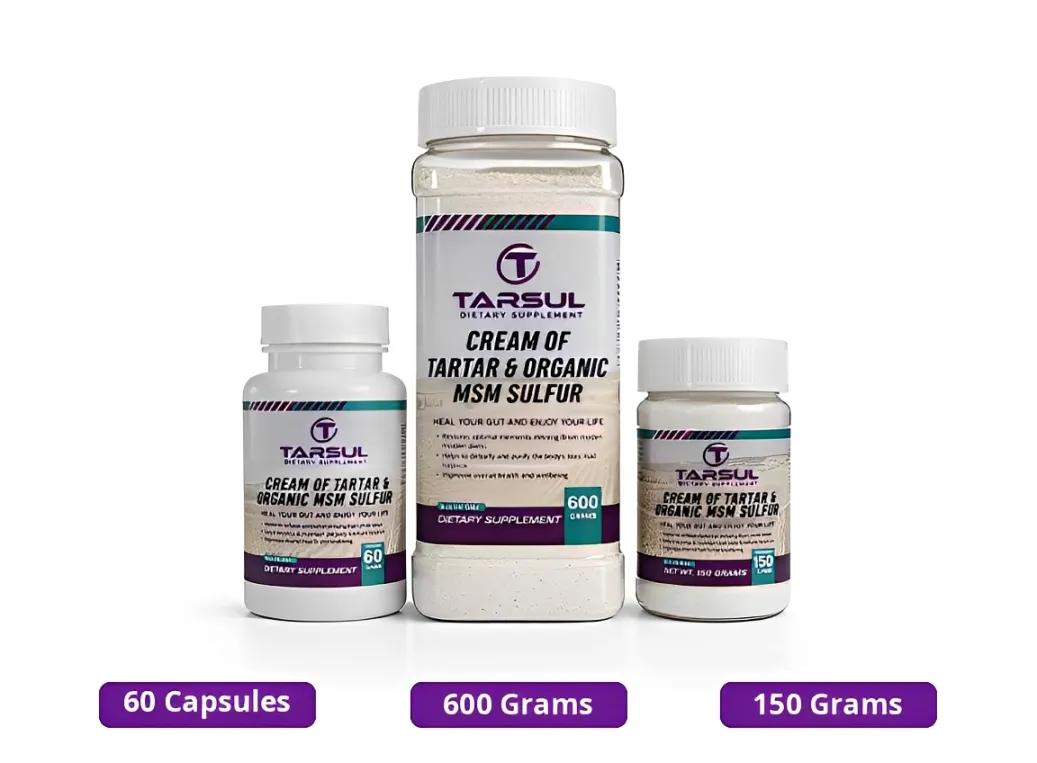
Most people know cream of tartar from the baking aisle. People have collected it from winemaking for thousands of years, for centuries it was a common medicine, and it is a natural source of potassium. Tarsul is a potassium supplement made mainly from cream of tartar, with a smaller amount of MSM, in capsules or powder.
What Is Cream of Tartar?
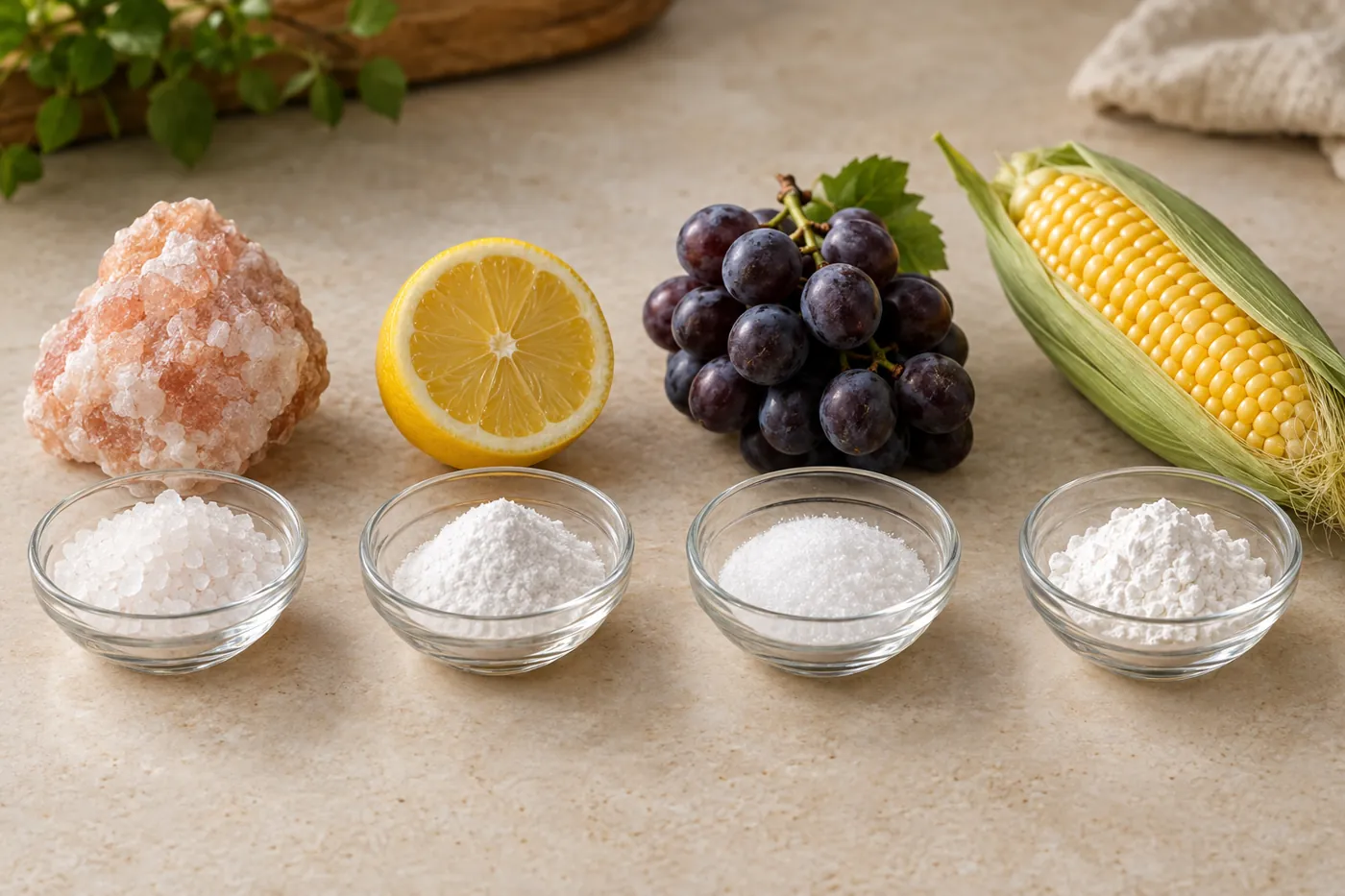
Cream of tartar starts in the grape. As grape juice ferments into wine, the potassium and tartaric acid in the fruit combine into a compound that does not stay dissolved once alcohol forms. It settles out as crystals on the inside of the barrel. Winemakers have collected those crystals for as long as there has been wine. Purified, they become the fine white powder sold today as cream of tartar.
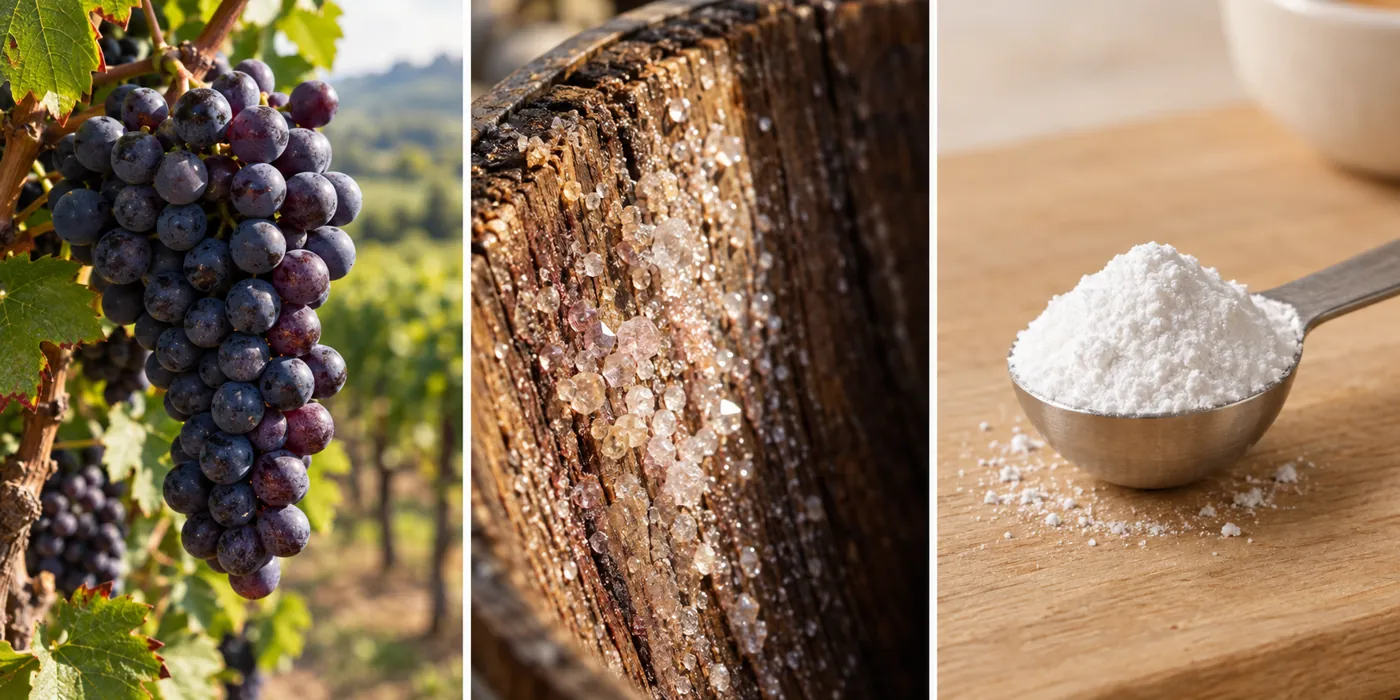
Its chemical name is potassium bitartrate, and about a fifth of its weight is potassium. The FDA lists it (as potassium acid tartrate) as a food ingredient that is Generally Recognized as Safe, obtained as a byproduct of wine manufacture.
What most people know
- A pinch steadies whipped egg whites.
- It is one of the ingredients in baking powder.
- Recipes call for small amounts.
What most people have never heard
- It is a natural potassium source made from grapes.
- It sat in medicine chests and pharmacy books for centuries.
- It was a potassium source long before it ended up next to the vanilla.
Read the full guide to cream of tartar and its health benefits
Thousands of Years of Cream of Tartar
The history is long, and it is well documented.
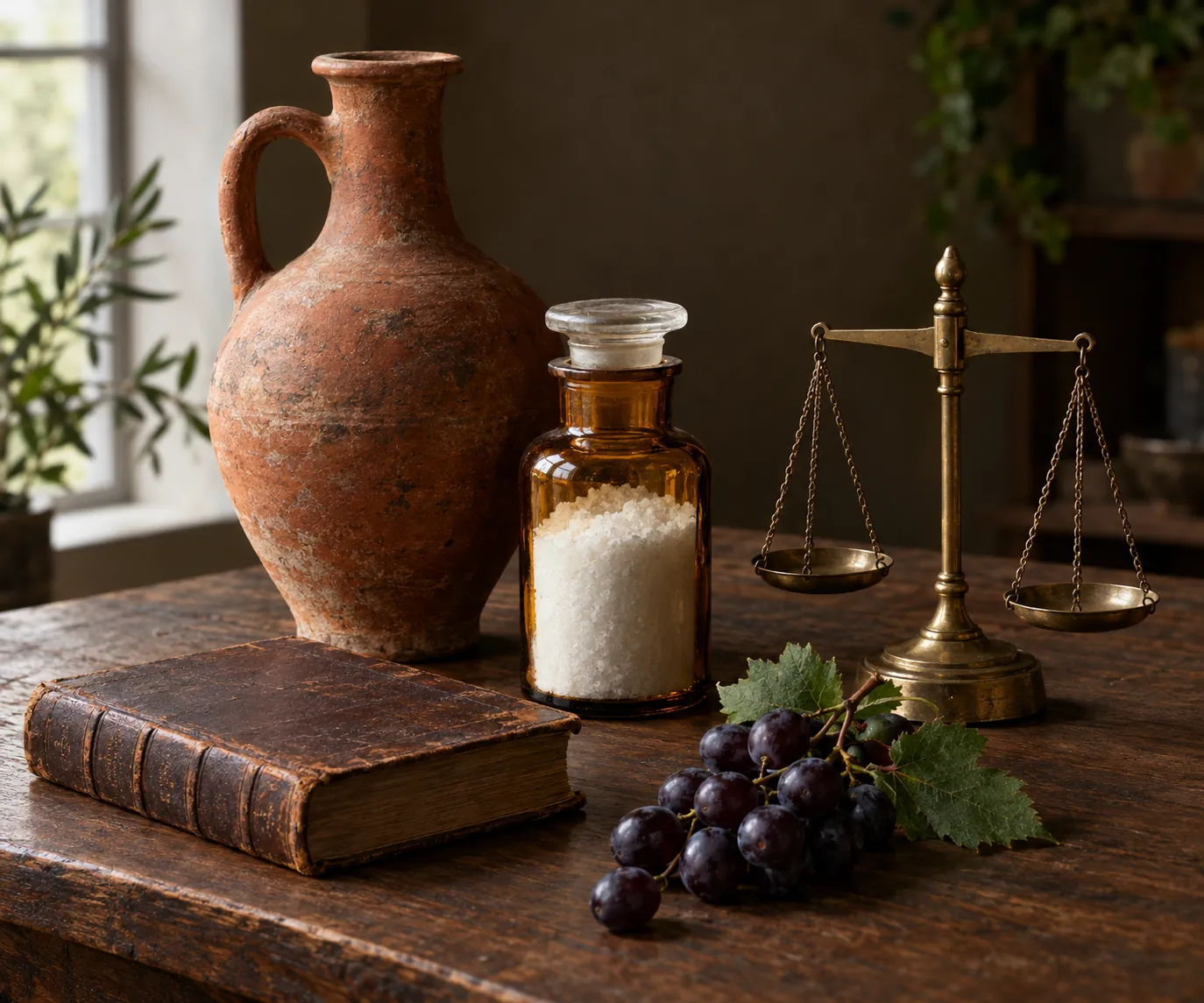
- About 7,000 years ago. Researchers at the Penn Museum found tartaric acid residue, the chemical signature of grapes and wine, in pottery jars from Hajji Firuz Tepe, a village in Iran’s Zagros Mountains dated to about 5400 to 5000 BC.
- The traveling medicine chest. When Lewis and Clark set out in 1803, their medical supplies included two pounds of cream of tartar. A medical authority of that era wrote that “there are few medicines more commonly employed.”
- The pharmacy formula books. Pharmacists followed official formularies and pharmacopoeias. The U.S. Pharmacopoeia’s sulphur lozenge combined precipitated sulfur with potassium acid tartrate, which is cream of tartar.
- Into the 20th century. The Smithsonian holds a bottle of sulphur and cream of tartar lozenges that the drug maker Sharp & Dohme donated in 1927, as part of a collection of potassium preparations.
That pairing of sulfur and cream of tartar is the one Tarsul carries forward today.
Why Cream of Tartar Dropped Out of Sight
As medicine moved toward manufactured drugs in the 20th century, older pharmacy preparations like cream of tartar left the medicine cabinet. Cream of tartar stayed in the kitchen, so that is where most people know it from today.

Potassium supplements also became unusually small. Decades ago, concentrated potassium chloride tablets were linked to injuries in the small intestine, and the FDA required warnings on some potassium drug products providing more than 99 mg. The NIH notes that many supplement makers now cap their products at 99 mg of potassium, only about 2% of the Daily Value. The FDA has not ruled on whether supplements above that amount need the same warning.
So two things happened:
- Cream of tartar moved from the medicine cabinet to the spice rack.
- Potassium supplements settled at a fraction of what a day’s diet provides.
Between those two shifts, a food-grade potassium source with thousands of years of use became something most people only buy for baking. Tarsul exists to bring it back into view.
Potassium Is an Everyday Mineral Most Diets Lack
Potassium is an essential mineral needed by every cell in your body. The NIH explains that it is present in all body tissues and is required for normal cell function, including:
- Nerve signals that travel through your body
- Muscle contraction, including the steady beat of your heart
- Normal kidney function
- Fluid and electrolyte balance, working alongside sodium
Even so, the Dietary Guidelines for Americans name potassium as a dietary component of public health concern, because most people do not get enough from their diet. The NIH reports that people in the United States consistently take in less potassium than recommended. The Adequate Intake is 3,400 mg a day for adult men and 2,600 mg for adult women, while average intakes run closer to 3,000 mg for men and 2,300 mg for women. The Daily Value used on labels is 4,700 mg.
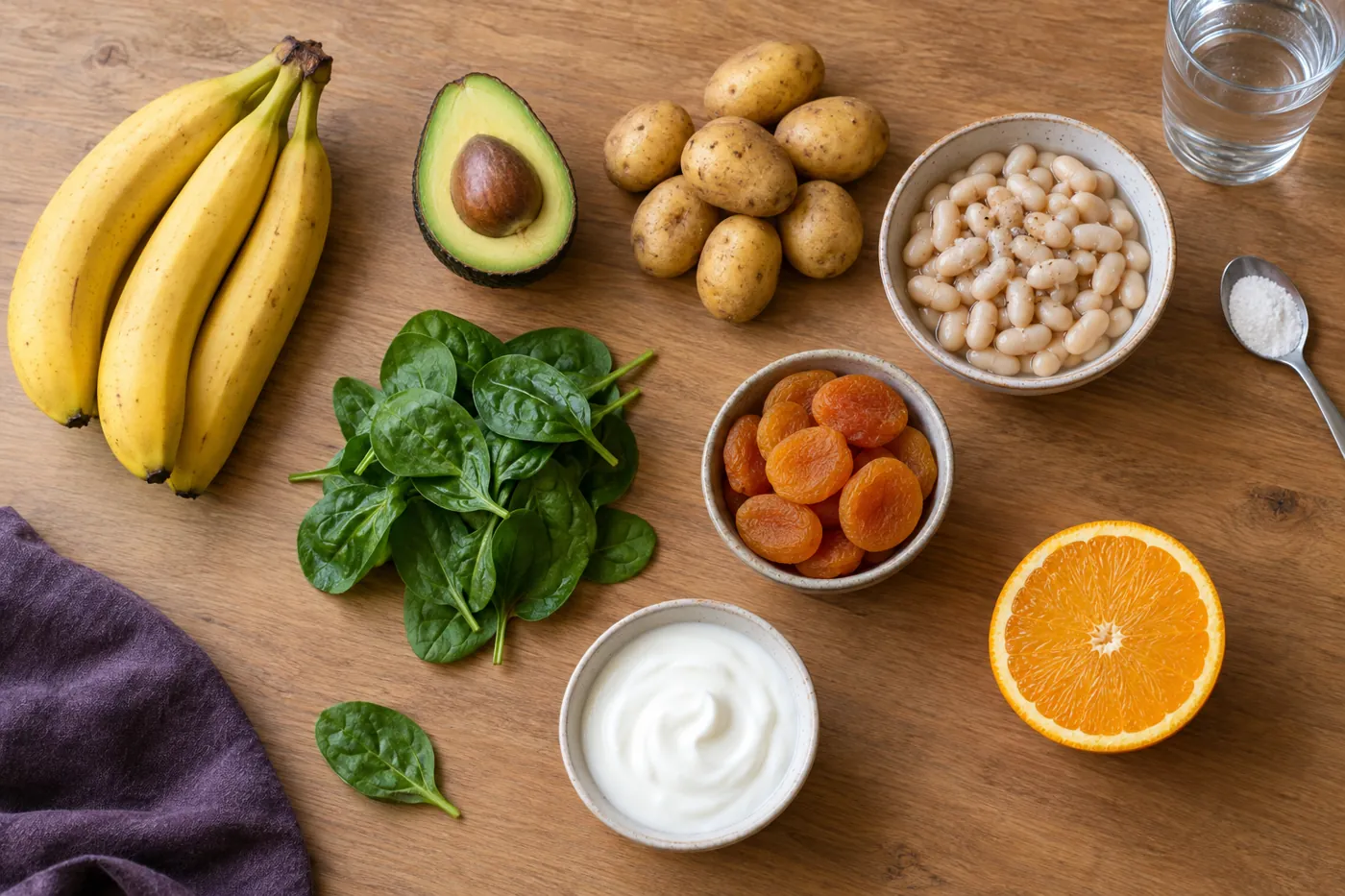
Dietary potassium comes first. Fruits, vegetables, beans, potatoes, and dairy are the foundation of a healthy diet. Cream of tartar is a simple way to add to what your meals already provide. Many people find it easiest as a daily habit: capsules with breakfast or a spoonful of powder in a glass of water, at the same time each day. It is a quiet, everyday nutrient, and that is exactly why a steady routine suits it.
Comparing the Common Forms: Citrate, Gluconate, and Cream of Tartar
Potassium supplements are never the pure mineral. It is always bound to a partner, forming one of several potassium salts. The NIH notes that potassium chloride is the most common form in supplements, and that citrate, gluconate, phosphate, aspartate, and bicarbonate are also used. Here is how the most familiar forms compare.
| Form | Where it comes from | Potassium by weight (approx.) |
|---|---|---|
| Potassium chloride | Mined mineral, also used in salt substitutes | About 52% |
| Potassium citrate | Potassium combined with citric acid | About 36% |
| Cream of tartar (potassium bitartrate) | Crystals that form naturally during winemaking | About 21% |
| Potassium gluconate | Potassium combined with gluconic acid | About 17% |
Because the forms differ so much, the Supplement Facts panel lists elemental potassium, the amount of potassium itself, rather than the weight of the whole compound. When you compare potassium supplements, look at:
- The elemental amount per serving on the Supplement Facts panel
- The form of potassium, listed in the ingredients
- How short and clear the full ingredient list is
- Whether your pharmacist is comfortable with it alongside your prescriptions
The NIH cites a study finding that people absorb about 94% of the potassium in potassium gluconate, similar to the potassium in potatoes. Fewer studies have looked at the other forms.
What makes cream of tartar different is where it comes from. It is the only one of these that forms naturally from fruit, and the only one with thousands of years of use behind it.
What the MSM Adds
Tarsul’s second, smaller ingredient is MSM (methylsulfonylmethane), a naturally occurring sulfur compound. It is found in small amounts in everyday foods:
- Fruits and vegetables
- Grains
- Coffee and tea
- Milk

Older sulfur and cream of tartar products typically used elemental sulfur. Tarsul uses MSM, the form of sulfur most people take as a supplement today.
Sulfur is part of the proteins that make up skin, hair, and connective tissue. Researchers have studied MSM for joint comfort and exercise recovery, and a 2017 review in Nutrients describes it as well tolerated by most people. Read more about MSM.
Potassium Capsule or Powder: Which Fits Your Day?
Both formats contain the same two ingredients. Tarsul is not sold as a tablet. The only difference is how you like to take it.
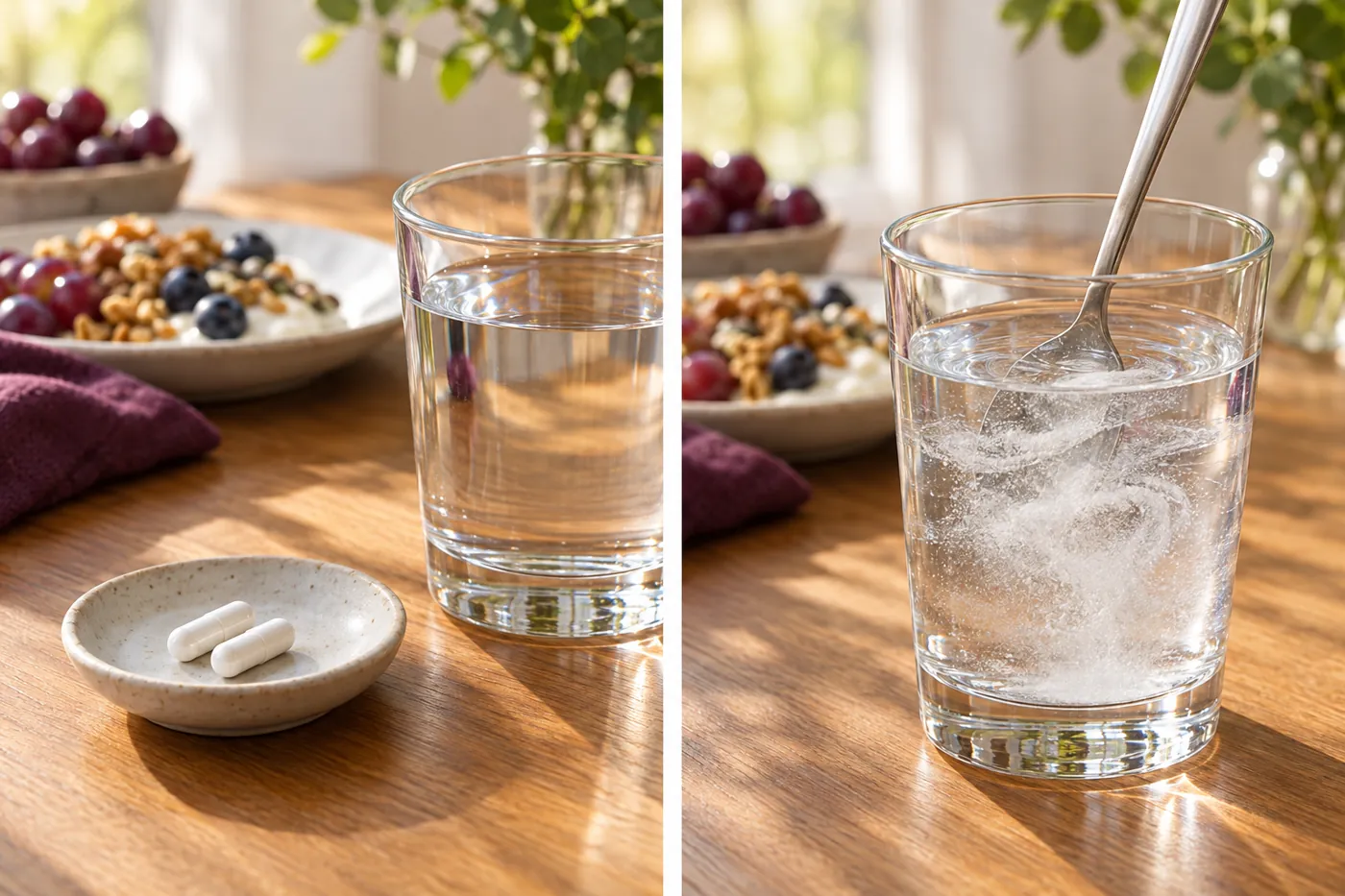
- 60-capsule bottle: convenient, with nothing to measure, and easy to travel with. Swallowed with water, following the label.
- 150 g powder: a good way to try the powder for the first time. Measured with a spoon and stirred into water or juice.
- 600 g powder: for daily powder users who want the best value. Measured the same way.
- Monthly autoship is available on each size and saves 10%.
- Orders over $50 ship free.
- Your label lists the amount to take and the potassium it provides. Those are the directions to follow.
Compare sizes and prices · See dosage and ingredient details
Explore Tarsul by Wellness Topic
Potassium and sulfur are involved in many parts of everyday health. These guides explain how cream of tartar and MSM relate to each area, what the research does and does not show, and when to talk with a healthcare professional first.

Acne
Learn about skin wellness, nutrition, and when to seek professional advice.

Arthritis
Learn about joint wellness and questions to discuss with a qualified clinician.

Boils
Learn why recurrent boils should be evaluated by a qualified healthcare professional.
Candida
Explore general information about digestive health, nutrition, and professional care.

Constipation
Explore digestive-wellness resources and when symptoms should be checked by a health professional.

Edema
Learn why new or persistent swelling should be assessed by a qualified professional.

Heartburn
Explore general digestive-wellness information and when to see a health professional.
Hemorrhoids
Learn about digestive habits and when symptoms should be checked by a health professional.
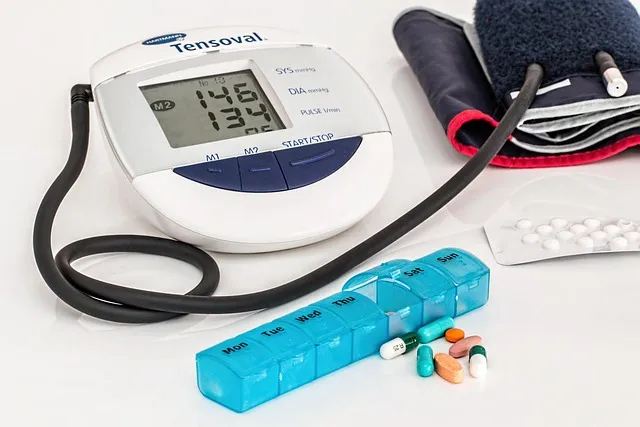
Hypertension
Learn about healthy routines and discuss blood-pressure concerns with a clinician.

IBS
Explore digestive-wellness topics and when to see a health professional.

Leaky Gut
Explore general information on digestive health and nutrition.
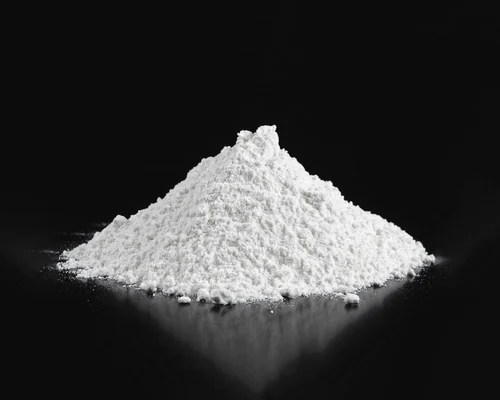
Mineral Deficiency
Learn why dietary and laboratory questions are best discussed with a qualified clinician.
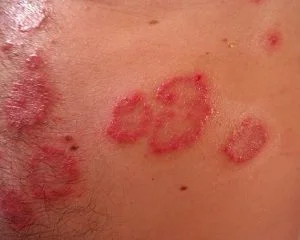
Psoriasis
Explore skin-wellness education and when a health professional can help.

Repel Insects
Review practical approaches to avoiding insect bites.

Stop Smoking
Explore evidence-based smoking-cessation resources from qualified professionals.

UTI
Learn why possible urinary tract infections need prompt clinical evaluation.
A Note from Russ, Our Founder
In 2008 I was looking for answers to a health problem of my own. I came across an older patent that combined sulfur and cream of tartar, bought the two ingredients, and tried it. It made a real difference for me, and I wanted other people to have the chance to try it too. I started Tarsul in 2010. The name is simply the two ingredients: Tar for cream of tartar and Sul for sulfur.
What surprised me most was how few people know what cream of tartar is. Explaining that is a big part of what we do. I take Tarsul every day now as part of my own routine, not only when something feels off.
We are still a small, family-run company in San Diego, and when you call or email, you reach us directly. If you take a prescription, we will always ask you to check with your doctor or pharmacist first, because this matters with certain medicines. If Tarsul is not right for you, let us know within 30 days of receiving your order and we will refund you.
— Russ Guillemot, Founder
Before You Start: A Quick Safety Check
Because cream of tartar contains potassium, please talk with your doctor or pharmacist before taking Tarsul if you:
- Have kidney disease
- Take an ACE inhibitor (such as benazepril)
- Take an angiotensin receptor blocker (such as losartan)
- Take a potassium-sparing diuretic (such as spironolactone)
- Take other potassium supplements
The NIH notes that for people in these groups, even normal potassium intakes can push blood levels too high.
Because potassium affects how your heart and muscles work, your kidneys keep blood potassium levels in a narrow range, adjusting how much they release as your intake changes. Potassium levels that run too low (hypokalemia, often called potassium deficiency) or too high (hyperkalemia) are medical conditions diagnosed with a simple blood test, and they need a doctor’s care. Tarsul is not a treatment for either. If you want to know where your potassium levels sit, ask your doctor about a basic metabolic panel.
The same goes if you are pregnant, nursing, or managing any ongoing health condition. Tarsul is for adults.
How to Get Started
- Choose a format. Capsules for convenience, powder for flexibility.
- Follow the label. The directions on your bottle are the ones to use.
- Keep it simple. Take it at the same time each day so it becomes part of your routine.
- Ask us anything. Call 619-500-4403 or email info@tarsul.com.
Have a Question? Ask Us
Search our wellness guides, or send us a note. A real person at Tarsul reads every message.
Frequently Asked Questions
What is cream of tartar made from?
Grapes. It forms as crystals inside barrels while grape juice ferments into wine, and it is then purified into a white powder. Its chemical name is potassium bitartrate.
Is cream of tartar a good source of dietary potassium?
Yes. Potassium makes up about a fifth of its weight, which is why it was long used as a potassium preparation. Your Tarsul label lists the potassium in each serving.
What are the best potassium supplements?
The best choice depends on your diet, your health, and anything else you take, so it is worth asking your doctor or pharmacist. Look at how much potassium the label lists, the form of potassium, and whether the ingredient list is short and clear. Tarsul is for people who want potassium from cream of tartar, a natural source with a long history, rather than a mined mineral.
Why do most pills on the shelf contain only 99 mg?
Many manufacturers stay at or below 99 mg because the FDA requires a warning on some potassium drug products above that amount, after concentrated potassium tablets were linked to small-intestine injuries. It is a manufacturing convention, not a measure of how much potassium your body needs. Higher doses are available by prescription.
Is it good to take potassium every day?
Your body uses potassium every day and does not store large amounts, which is why a steady daily intake from food matters. If you add potassium supplements, follow the label and talk with your doctor first if you have kidney disease or take a prescription that affects potassium. The right potassium dose for you is a question for your doctor.
What if I have low potassium or a potassium deficiency?
Low potassium found on a blood test is a health issue with many possible causes, and your doctor should guide the next steps. Please do not use Tarsul or any dietary supplement in place of that care.
Is it the same cream of tartar as the one in my kitchen?
It is the same compound. In Tarsul it is combined with MSM in fixed amounts, so every scoop and capsule is consistent. Please follow the Tarsul label rather than mixing your own, because a spoonful of cream of tartar is a concentrated source of potassium.
What is MSM, and why is it in Tarsul?
MSM is a sulfur compound found in many foods. Sulfur and cream of tartar were paired for generations, and Tarsul updates that pairing with MSM. Tarsul comes as capsules and powder, not tablets.
Can I take Tarsul with my medications?
Please ask your doctor or pharmacist first, especially if you take blood pressure medications, a diuretic, or other potassium supplements, or if you have kidney disease. See the potassium check above.
What if it is not right for me?
If you are not satisfied, contact us within 30 days of receiving your order for a full refund.
Rediscover Cream of Tartar
Potassium from cream of tartar, with thousands of years of history. Choose capsules or powder, follow the label, and see how it fits your day.
See Capsules and Powder →30-day money-back guarantee • Free shipping on orders over $50
Sources
- National Institutes of Health, Office of Dietary Supplements. Potassium: Fact Sheet for Health Professionals.
- U.S. Departments of Agriculture and Health and Human Services. Dietary Guidelines for Americans, 2020–2025.
- Code of Federal Regulations. 21 CFR 184.1077, Potassium acid tartrate.
- Penn Today. Discovery finds winemaking is centuries older than previously believed (Hajji Firuz Tepe, 5400–5000 BC).
- Discover Lewis & Clark. The Chemical Drugs (cream of tartar in the expedition’s medicine supplies).
- Encyclopædia Britannica, 1911. Sulphur (U.S.P. sulphur lozenge with potassium acid tartrate).
- Smithsonian National Museum of American History. Sulphur and Cream of Tartar Lozenges, 36 Lozenges.
- Butawan M, Benjamin RL, Bloomer RJ. Methylsulfonylmethane: Applications and Safety of a Novel Dietary Supplement. Nutrients. 2017;9(3):290.
About this page — last reviewed October 2026
Written by Russ Guillemot, founder of Tarsul. Tarsul is a family-run dietary supplement company in San Diego, California, selling since 2010. We are not physicians, and nothing on this page is a diagnosis or a treatment plan.
Tarsul · 2307 Fenton Parkway #107-42, San Diego, CA 92108 · 619-500-4403 · info@tarsul.com
These statements have not been evaluated by the Food and Drug Administration. This product is not intended to diagnose, treat, cure, or prevent any disease.