
Psoriasis and Chronic Skin Condition Information
This page provides general educational information. It is not medical advice, and it does not provide a diagnosis or a personal course of care.
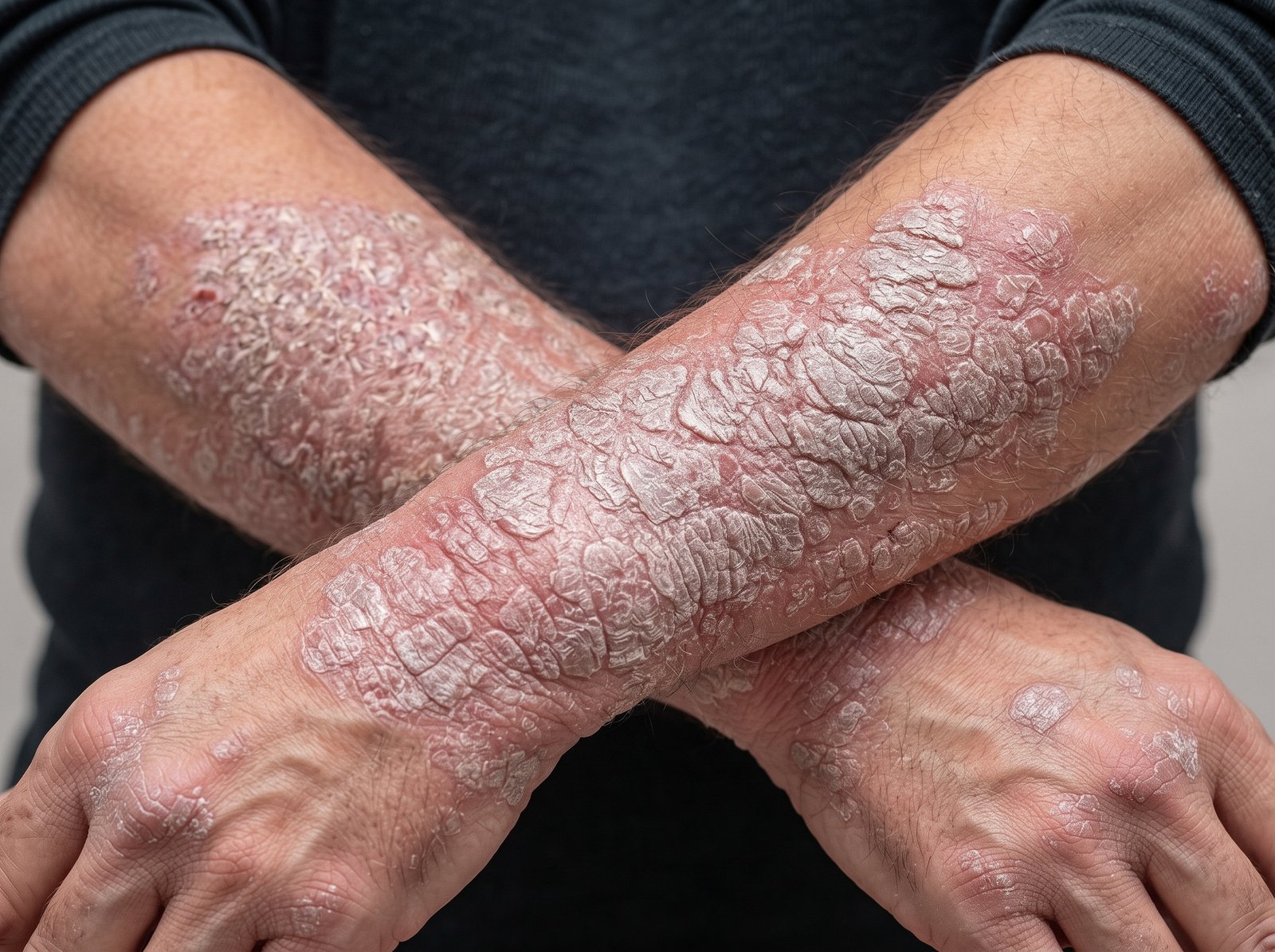
Psoriasis is a chronic autoimmune condition in which the immune system speeds up skin cell turnover dramatically, causing cells to build up on the surface faster than the body can shed them. That buildup shows up as the raised, scaly patches most people associate with the condition, though psoriasis can also affect the scalp, nails, and joints (in the case of psoriatic arthritis). It tends to run in cycles of flares and remission, and triggers — stress, certain infections, weather, specific medications — vary quite a bit from person to person.
When professional advice matters
See a dermatologist for new or worsening skin patches, joint pain or swelling that could indicate psoriatic arthritis, or flares that aren’t responding to your current routine. A formal diagnosis matters because psoriasis can resemble other skin conditions, and treatment approaches differ.
Everyday wellness questions
Tracking flare triggers — stress, weather changes, skincare products, illness — over time can reveal patterns that are hard to spot in the moment. Photos of affected areas over weeks or months are also genuinely useful for a dermatologist assessing progression.

Explore skin condition topics
Here’s what we’ve written on psoriasis and related questions:
- Natural supplement approaches people research for psoriasis
- Alternatives people research alongside methotrexate and biologics
- The idea of addressing psoriasis from the inside rather than purely topically
- Psoriasis and psoriatic arthritis together, since the two are closely linked
- The gut-skin axis as it relates to psoriasis
- Anti-inflammatory approaches as a category
- Scalp psoriasis specifically, which brings its own set of challenges
- Managing and anticipating flare-ups
- Organic sulfur specifically, and its discussed relevance to skin conditions
- A closer look at evaluating natural psoriasis products
About Tarsul
Tarsul is a dietary supplement containing cream of tartar and MSM sulfur. It is not a substitute for individualized medical care or prescribed medicine. Follow the current product label for ingredients, directions, and warnings.
Natural Supplements for Psoriasis: Soothing Skin Flares from Within — a longer read covering what to look for, how the ingredients work, and when to see a doctor.
Common questions
No — it’s an autoimmune condition, not an infection, and it cannot be spread through skin contact.

Roughly a third of people with psoriasis go on to develop psoriatic arthritis, where the same immune process that affects the skin also affects the joints. New joint pain or stiffness in someone with psoriasis is worth mentioning to a doctor.
Some people report that certain foods worsen or improve flares, and there’s ongoing research into inflammation and diet generally, though responses vary a lot by individual and there’s no single diet proven to work for everyone.
For general product questions, contact Tarsul. For product directions and safety information, review the Tarsul Product Directions and Safety Information page, or see current product options.
Tarsul contains just two things. Cream of tartar is a concentrated potassium source — how much potassium, and who should check with a doctor first, is covered there. MSM sulfur covers what the human research does and does not show, plus dosage and side effects.
About this page — last reviewed September 2026
Published by Tarsul, a family-run dietary supplement company operating from San Diego, California since 2010. Written and reviewed in-house by Russ Guillemot, founder, drawing on fifteen years of direct correspondence with customers and wholesale accounts. We are not physicians and nothing here is a diagnosis or a course of treatment.
Where we reference published research we name the authors and the journal so you can look it up yourself. Where something is a common observation rather than a finding, we say so plainly. If a claim cannot be sourced, we leave it out.
Tarsul · 2307 Fenton Parkway #107-42, San Diego, CA 92108 · 619-500-4403 · info@tarsul.com
These statements have not been evaluated by the Food and Drug Administration. This product is not intended to diagnose, treat, cure, or prevent any disease.