
Skin • Staph • When to see a doctor
Recurring Boils: Why They Keep Coming Back and What Actually Helps
If boils keep coming back, you are not alone, and it is rarely something you did wrong. Here is a calm, sourced look at why they return, what a doctor can check, and where nutrition fits.
See Tarsul Capsules and Powder →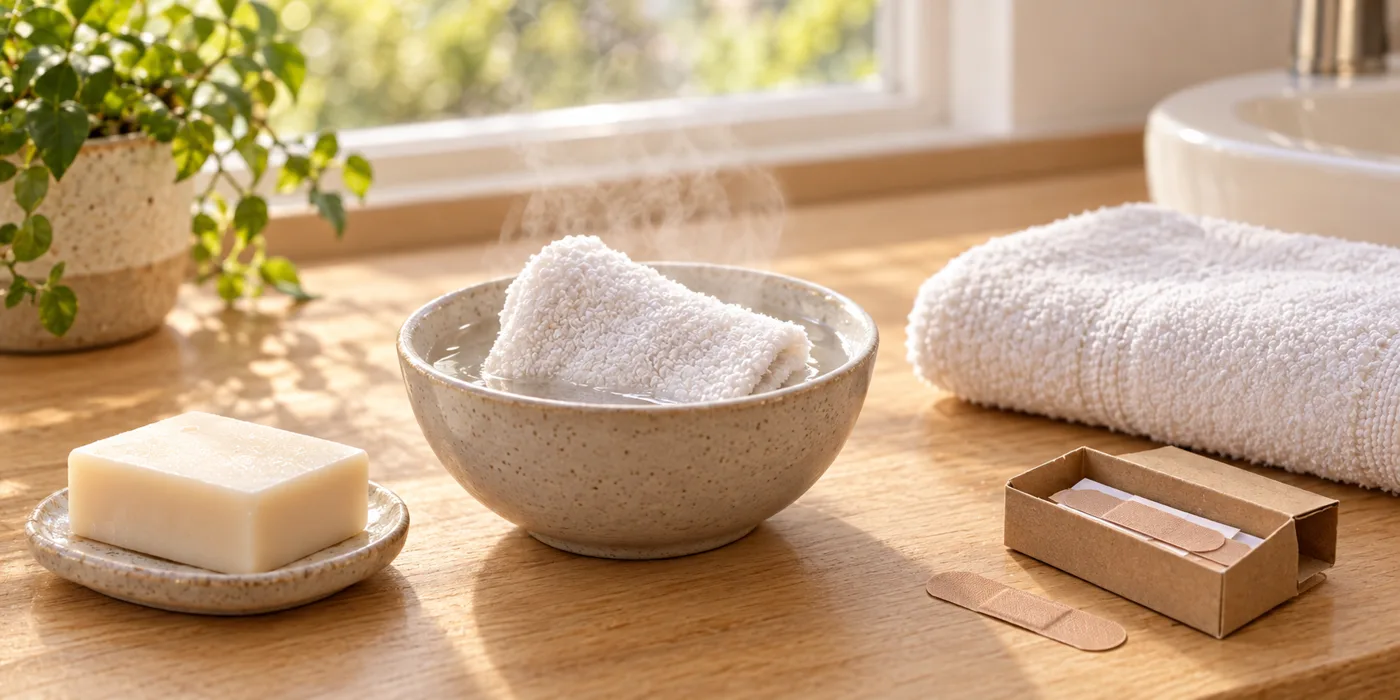
Key points
- A boil is a deep infection of a hair follicle, usually caused by staph bacteria.
- Boils that keep coming back most often trace to staph living quietly in the nose or on the skin.
- A family member with boils, low iron, diabetes, and recent antibiotics all raise the odds of another one.
- A doctor can test for staph and low iron, and may suggest a household plan to clear the bacteria.
- No supplement, including Tarsul, has been shown to prevent or treat boils.
This page is general information, written by our founder. It is not medical advice or a plan of care.
What Is Recurrent Furunculosis?
A boil, which doctors call a furuncle, is a painful lump filled with pus that forms when bacteria infect a hair follicle. A cluster of boils joined under the skin is a carbuncle. Most boils are caused by a bacterium called Staphylococcus aureus, or staph (MayoClinic.org).
Boils usually come with symptoms such as warmth, swelling, and a yellow or white tip of pus. One boil is common and usually heals in a week or two. When boils return again and again, doctors call it recurrent furunculosis. Recurrent boils can be frustrating, but they usually have a reason, and that reason can often be found.
Boils, Folliculitis, or Something Else?
A shallower, milder infection of the follicles, often seen as small red bumps after shaving, is a related problem. Recurrent folliculitis and boils share many causes. A doctor can tell them apart and also look for a sign of a different skin condition, described below.
Could It Be Hidradenitis Suppurativa (HS)?
If boil-like lumps keep forming in the armpits, groin, buttocks, or under the breasts, it may be HS rather than ordinary boils. HS is a long-term condition that needs a dermatologist. Its treatments differ from boil treatments, and early treatment can reduce flare-ups (AAD.org).
Why Boils Keep Coming Back
The main reason is simple: the bacteria never fully leave. Staph can live harmlessly in the nose, armpits, and groin for years, a carrier state that most people never notice. When skin is rubbed, shaved, or broken, the same bacteria colonize a follicle again and start another boil.
A 2012 review by Demos and colleagues found nasal staph in about 60 percent of people with recurrent boils (Br J Dermatol, 2012). A Queensland guideline puts it nearer 80 percent (Queensland guideline).
A 2014 review found the strongest single predictor was a family member with boils. Anemia, earlier antibiotic treatment, diabetes, a recent hospital stay, and several boils at once also predicted recurrent infections (Ibler and Kromann, 2014). Hot, humid weather, tight clothing, and obesity add to the risk (Merck Manual).
None of this means you are unclean. Carrying staph is extremely common. It mostly means the plan has to deal with the bacteria where they live, not just the boil in front of you.
Is Your Body Lacking Something? Nutrition and Skin Health
The honest answer is: usually not. Boils are mainly a bacteria problem. But one nutrient has real evidence behind it.
Iron. The Demos review reports that low iron was a risk factor for recurrent boils even in people who were not anemic. When 16 people with low iron took iron for three to four weeks, all but one had no further boils (Demos et al.). It was a small study, but the test is simple. Please do not start iron on a guess, though, because too much causes its own problems.
Blood sugar is worth checking too. Diabetes is a well-documented risk factor, and repeated infections of the skin are sometimes the first clue that blood sugar is running high.
Sulfur has a long history in skin care, and a 1916 Los Angeles newspaper headline called it the very best cure for boils. We are not aware of any controlled study showing that taking sulfur, MSM, or potassium by mouth prevents or heals boils, so we do not claim that it does.
A Note from Russ, Our Founder
In 2008 I was looking for answers to a health problem of my own, and I found an old pairing of sulfur and cream of tartar. I started Tarsul in 2010 so other people could use that simple formula without guessing at amounts.
If boils are why you are reading this, here is what I want you to know. They deserve a real answer, and the real answers are on this page: staph, iron, blood sugar, and the people you live with. A doctor can check all four in a visit or two as part of a routine health check. Tarsul is a daily mineral routine, but it is not a boil treatment, and I would rather tell you that plainly.
Self-Care for a Boil You Have Now
- Warm compresses. A clean, warm, wet washcloth held on the boil several times a day helps it come to a head and drain on its own. Once the pus drains, the pain usually eases quickly (American Academy of Dermatology).
- Do not squeeze it, cut it, or try to drain pus with a needle. That can push the infection deeper and lead to complications. A large or very painful boil may need medical treatment to drain it.
- Cover it once it drains, with a clean bandage, and wash your hands after touching it.
Lowering the Chance of the Next One
- Do not share towels, washcloths, razors, or bedding. Wash them in hot water.
- Ask about an antiseptic body wash. Washing with chlorhexidine soap can help prevent new boils (Merck Manual).
- Ask about decolonization. Doctors often prescribe an antibiotic ointment for the nose, twice a day for 5 to 10 days, with a daily antiseptic wash (Ibler and Kromann). Everyone in the household should take part at the same time (Queensland guideline).
- Reduce friction with loose, breathable clothing, and take care when shaving.
- Treat eczema or other skin problems first, because they make staph harder to clear.
What a Doctor Can Check
A primary care doctor can handle most of this. Bring your medical history, including anyone at home who gets boils.
- Staph: a swab of the nose or skin, which can also show whether it is MRSA.
- Iron: a blood test, including stored iron, not just a blood count.
- Blood sugar: an A1C test.
- Household: whether others need decolonization too.
- Pattern: whether the lumps might be HS or skin abscesses that need other treatments.
Oral antibiotics treat a bad infection, but they do not stop the next one on their own. Lowering staph on the skin is what changes the pattern, which is why medical guidelines focus on it.
When to Get Medical Care
See a doctor if you have more than one boil at a time, or if a boil is on your face, worsens quickly, is extremely painful, causes a fever, grows despite self-care, has not healed in two weeks, or keeps coming back (MayoClinic.org).
The NHS advises urgent care if the skin around a boil is hot, painful, and swollen, if you feel hot, cold, or shivery, or if you have a weakened immune system (NHS). Red streaks spreading from a boil also need prompt treatment.
About Tarsul’s ingredients: Tarsul is made mainly from cream of tartar, a concentrated source of potassium. If you have kidney problems, or take medicines that raise potassium, please talk with your doctor before using it. The details are on our cream of tartar page.
Frequently Asked Questions
What is your body lacking when you get boils?
Usually nothing. Most boils start when staph that already lives on the skin or in the nose gets into a hair follicle. The one nutrient with research behind it is iron: low iron, even without anemia, has been linked to boils that keep returning. A simple blood test can check it.
Why do I keep getting boils in the same spot?
Often because staph keeps living on that patch of skin, and friction, sweat, or shaving keep giving it a way in. Repeated lumps in the armpits, groin, or under the breasts can also be HS, which a dermatologist can diagnose.
Are boils contagious?
The bacteria can spread by skin contact and shared towels, razors, and bedding. That is why boils often run in households, and why doctors sometimes treat the whole family at once.
Does insulin resistance cause boils?
High blood sugar makes skin infections more likely, and diabetes is a known risk factor for boils that come back. If you get boils often, an A1C blood test is a sensible check.
Can a supplement stop boils from coming back?
No supplement has been shown to prevent or treat boils. If a blood test shows low iron, your doctor may recommend iron. That is a specific fix for a specific deficiency.
Can Tarsul help with boils?
Tarsul is a daily mineral supplement made mainly from cream of tartar, with a smaller amount of MSM. It is not a treatment for boils or any skin infection. If boils keep coming back, the most useful step is a visit to your doctor.
Should I pop or squeeze a boil?
No. Squeezing can push the infection deeper. Warm compresses help a boil drain on its own, and a large or painful one may need to be drained by a doctor.
Tarsul and Your Daily Routine
If boils brought you here, start with the checklist above. If you also want a simple daily mineral routine, Tarsul is two ingredients, cream of tartar and MSM, made in San Diego since 2010. Read about cream of tartar and MSM, see dosage and ingredients, or see Tarsul capsules and powder.
Have a Question? Ask Us
Send us a note. A real person at Tarsul reads every message.
Sources
Demos M, McLeod MP, Nouri K. Furunculosis: a literature review. Br J Dermatol. 2012;167(4):725-732.
Ibler KS, Kromann CB. Furunculosis: challenges and management. Clin Cosmet Investig Dermatol. 2014.
MayoClinic.org: boils and carbuncles.
AAD. How to treat boils and styes.
AAD. HS overview.
Merck Manual Professional Edition. Furuncles.
Children’s Health Queensland. Boils that recur: management and staph decolonisation.
NHS. Boils.
About this page — last reviewed October 2026
Written by Russ Guillemot, founder of Tarsul. Tarsul is a family-run dietary supplement company in San Diego, California, selling since 2010. We are not physicians, and nothing on this page is a diagnosis or a treatment plan. Where we cite research, we link to it so you can read it yourself.
Tarsul · 2307 Fenton Parkway #107-42, San Diego, CA 92108 · 619-500-4403 · info@tarsul.com
These statements have not been evaluated by the Food and Drug Administration. This product is not intended to diagnose, treat, cure, or prevent any disease.