
Mosquitoes • Ticks • What works
Natural Mosquito Repellent for Skin: What Works, What Doesn’t, and Where Sulfur Fits
Plenty of people want a plant-based way to keep bites away. Some options are tested and work well, some popular ideas do not, and sulfur has a real but narrow job. Here is a calm, sourced guide.
See Tarsul Capsules and Powder →
Key points
- The best plant-based options for skin are registered with the EPA: OLE, PMD, and 2-undecanone.
- The CDC says it does not know how well unregistered products, including many essential oils, work.
- Taking vitamin B1 or garlic does not prevent bites, according to the CDC and controlled studies.
- Sulfur dust on socks and pant legs is a traditional option for ticks and chiggers, not for mosquito bites.
- Tarsul is a dietary supplement, not an insect repellent.
This page is general information, written by our founder. It is not medical advice.
What Makes a Natural Option Work?
A repellent works by making you hard for a mosquito to find or land on, mostly by interfering with how it senses your skin. The simplest way to know whether a product works is to check whether it has been tested. In the United States, that means registration with the Environmental Protection Agency (EPA). A registration number on the label means the company gave the EPA data on how well the repellent works (CDC).
The good news for anyone who prefers natural products: of the six active ingredients the CDC recommends, two come from plants. One is OLE, short for the oil of a lemon eucalyptus tree. The other is 2-undecanone. PMD is the active compound in OLE (CDC). These are real, tested options, not compromises.
The CDC is also clear about what it does not know. It says the effectiveness of unregistered products, including some natural ones, is unknown (CDC).
Oil of Lemon Eucalyptus and Other Plant-Based Options
OLE is the best-known of the botanical repellents. It is a refined, tested ingredient, and it is sold as a pump spray, a lotion, and in other forms. The form matters less than the active ingredient and its EPA number. You will also see repellent wipes and the occasional repellent balm. They are convenient, but check the label for a registered ingredient.
2-undecanone is the other plant-derived choice on the CDC list. Soy-based products and blends of other natural ingredients are sold too, but they are not among the ingredients the CDC recommends.
The benchmark synthetic ingredients are DEET, picaridin, and IR3535. They have the longest track record. If you are going somewhere with a real disease risk, such as areas with West Nile, dengue, or Lyme disease, use an EPA-registered product, natural or synthetic, rather than an untested one.
How to Apply It the Right Way
How you apply a repellent matters as much as which one you pick. The EPA’s directions are simple (EPA):
- Apply repellent only to exposed skin and on top of clothing, never under it.
- Never use a repellent over cuts, wounds, or irritated skin, and keep it away from eyes and mouth.
- With a spray, do not spray your face. Spray your hands, then apply it to your face, and avoid breathing the spray.
- For children, put the repellent on your own hands first, then on the child, and do not apply it to a child’s hands.
- Back indoors, wash treated skin and clothes with soap and water.
Natural does not always mean gentle. A plant oil can irritate skin just as a synthetic repellent can, so if one bothers your skin, wash it off with soap and water and try a different active ingredient. Oil-based sprays can feel greasy, and a lotion may suit you better. Many mosquitoes bite most at dawn and dusk, so those are the hours to reapply repellent as the label directs.

Do Essential Oils Work?
Citronella, peppermint, cedar, geranium, cinnamon, and camphor all show up in natural bug sprays, candles, and beauty products. Some essential oils may discourage mosquitoes for a short time, but they evaporate quickly, and most have not been tested in the way registered ingredients have.
One point causes a lot of confusion. Pure lemon eucalyptus essential oil is not the same as OLE. The CDC does not recommend the pure eucalyptus oil, because it has not been tested for safety and effectiveness the way the formulated products have (CDC Yellow Book).
Essential oils can also irritate skin. If you use them, dilute them as the label directs, test a small patch first, and keep them away from eyes and from young children.
Is a DIY Mosquito Repellent or Homemade Mosquito Spray Worth It?
Recipes for a DIY mosquito repellent are everywhere: witch hazel, vinegar, a few drops of essential oil, and a spray bottle. They are cheap and smell nice. The trouble is that nobody knows the dose, how long it lasts, or whether it works at all. A homemade mosquito spray might feel like it is helping on a quiet evening, but it is not a good choice where bites carry real risk.
If you like the idea of a natural repellent spray, the most reliable version is a store-bought product with OLE or PMD and an EPA number. You still get a plant-derived ingredient, and you also get a tested dose.
Natural Insect Protection From the Inside: Pills and Vitamins
The idea is appealing: take a pill and become invisible to bugs. It has been tested, and so far it has not held up.
Vitamin B1. A 2022 scoping review in the Bulletin of Entomological Research concluded that B1 does not repel biting insects of any species, at any dose, over any period, in any form (Shelomi, 2022). Our page on vitamin B1 and mosquito bites covers the research.
Garlic and vitamin B. The CDC Yellow Book, the guide doctors use for travel health, says eating garlic or taking vitamin B does not work, and neither do sound devices or wristbands (CDC Yellow Book).
Sulfur, MSM, and Tarsul. We are not aware of any controlled study showing that taking sulfur, MSM, or Tarsul by mouth keeps bugs away. Older pages on this site suggested otherwise. We have retired them, because a claim like that should rest on evidence.
Where Sulfur Fits: Ticks and Chiggers
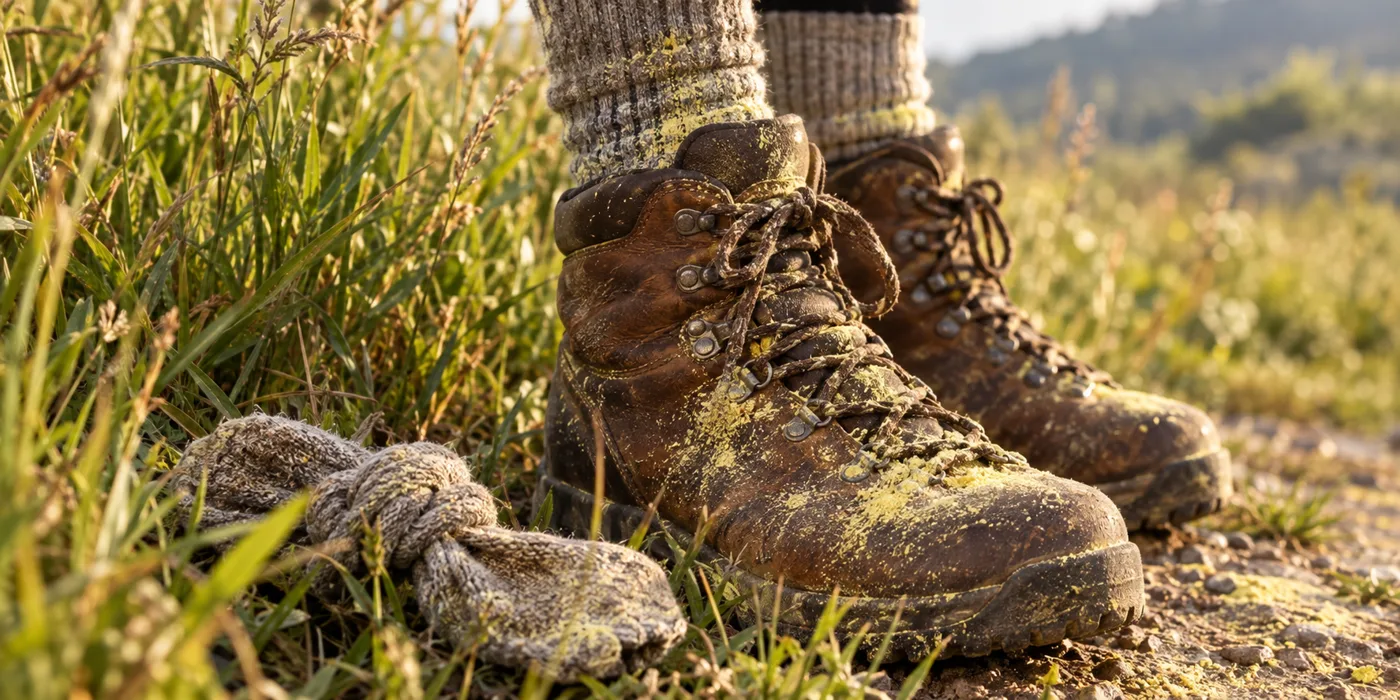
Sulfur does have a genuine, if narrow, place in bite prevention, and it is on the outside of your clothes. For generations, people in rural areas have filled an old sock with dusting sulfur and patted it on shoes, socks, and pant legs before walking through tall grass. Texas A&M AgriLife entomologists describe this as a cheap and convenient option against chiggers (Texas A&M AgriLife Extension), and a University of Florida publication notes that dusting sulfur is often used as a repellent (University of Florida IFAS).
Texas A&M entomologist Mike Merchant has said that sulfur repels ticks and chiggers, that it is not quite as good as DEET, and that it does not work for insects (Lone Star Outdoor News, quoting Texas A&M). Ticks and chiggers are arachnids, close relatives of mites, and sulfur has long been used against mites.
Sulfur dust rubs off on brush and wet grass, so reapply it. It has an odor. And it can irritate the eyes and lungs, so avoid breathing it or getting it near your face (The People’s Pharmacy).
A Note from Russ, Our Founder
In 2008 I was looking for answers to a health problem of my own, and I found an old pairing of sulfur and cream of tartar. I started Tarsul in 2010 so other people could use that simple formula without guessing at amounts.
The idea that sulfur keeps bugs away has followed that pairing for a long time, and I understand why people ask. Here is my honest answer. For ticks and chiggers, sulfur dust on the outside of your clothes is a real, old-fashioned option. For mosquito bites, the evidence does not support any pill, including ours. If you are outdoors where bites matter, please use a tested product.
A Simple Bite-Prevention Routine
- Choose a tested product. If you prefer natural, look for OLE, PMD, or 2-undecanone with an EPA number (CDC).
- Sunscreen first, then repellent. Let the sunscreen settle before you apply the repellent (CDC).
- Cover up with loose, long-sleeved shirts and long pants. Clothing treated with permethrin adds protection, but never put permethrin on skin (CDC).
- Empty standing water weekly in buckets, flowerpot saucers, birdbaths, and toys (CDC).
- Repair window and door screens, and use air conditioning if you have it.
- For ticks and chiggers, tuck pants into socks, stay in the middle of trails, and consider a sulfur sock.
- Check for ticks and shower within two hours of coming inside, which can lower the risk of Lyme disease (CDC).

Insect Bite Safety Notes
Children. Do not use products containing OLE or PMD on children under 3 years old, and do not use insect repellents on a baby younger than 2 months (CDC). Follow the label, and ask your pediatrician if you are unsure.
Pregnancy. The CDC says EPA-registered products are safe and effective when used as directed, even during pregnancy and breastfeeding (CDC).
After a bite. If you develop a fever, a spreading rash, or flu-like symptoms in the weeks after a tick or mosquito bite, see a doctor and mention the bite.
About Tarsul’s ingredients. Tarsul is made mainly from cream of tartar, a concentrated source of potassium. If you have kidney problems, or take medicines that raise potassium, talk with your doctor before using it. Details are on our cream of tartar page.
Frequently Asked Questions
What is the best plant-based repellent for skin?
The plant-derived options with the best evidence are OLE, its active compound PMD, and 2-undecanone. All three are registered with the EPA as insect repellents, which means they were tested. Look for an EPA registration number on the label.
Does sulfur repel mosquitoes?
No good evidence says it does. Sulfur dust has a long track record against chiggers and ticks, but a Texas A&M entomologist notes that it does not work on insects. Taking sulfur by mouth has not been shown to keep mosquitoes away either.
Does sulfur repel ticks?
Dusting sulfur on shoes, socks, and pant legs is an old rural practice for ticks and chiggers, and extension entomologists describe it as a real, if weaker, alternative to DEET. It rubs off, so reapply it, and avoid breathing the dust.
Does vitamin B1 keep bugs away?
Controlled studies say no. The CDC lists taking vitamin B as ineffective, and a 2022 scoping review found that B1 did not repel biting bugs at any dose. We cover this on our vitamin B1 page.
Is there a supplement that works from the inside?
Not one that has held up in testing. The CDC says eating garlic or taking vitamin B does not work. That includes Tarsul. We are not aware of any study showing that Tarsul, MSM, or oral sulfur repels bugs, so we do not claim it does.
Do citronella or peppermint oil work?
Their effectiveness is not well known. The CDC says it does not know how well unregistered products work, and it does not recommend pure, unformulated eucalyptus essential oil.
Are plant-based repellents safe for children?
Do not use products with OLE or PMD on children under 3 years old, and do not use any repellent on an infant younger than 2 months. Ask your pediatrician which product fits your child’s age.
Tarsul and Your Daily Routine
Tarsul is a daily mineral supplement, two ingredients, cream of tartar and MSM, made in San Diego since 2010. It is not a bug repellent. If you came here for bite prevention, the routine above is the part that matters. If you are curious about the supplement, read about cream of tartar and MSM, or see Tarsul capsules and powder.
Have a Question? Ask Us
Search our guides, or send us a note. A real person at Tarsul reads every message.
Sources
Centers for Disease Control and Prevention. Preventing mosquito bites.
Centers for Disease Control and Prevention. Preventing tick bites.
Centers for Disease Control and Prevention. CDC Yellow Book: arthropods chapter.
Shelomi M. Thiamine (vitamin B1) as an insect repellent: a scoping review. Bull Entomol Res. 2022;112(4).
Texas A&M AgriLife Extension, Insects in the City. Chigger season. 2018.
Nyhus C. Lone Star Outdoor News. Repel ticks, chiggers with the sulphur sock.
University of Florida IFAS Extension. Invisible itches.
U.S. Environmental Protection Agency. Using insect repellents safely and effectively.
The People’s Pharmacy. How to repel chiggers with powdered sulfur.
About this page — last reviewed October 2026
Written by Russ Guillemot, founder of Tarsul. Tarsul is a family-run dietary supplement company in San Diego, California, selling since 2010. We are not physicians, and nothing on this page is a diagnosis or a treatment plan. Where we cite research, we link to it so you can read it yourself.
Tarsul · 2307 Fenton Parkway #107-42, San Diego, CA 92108 · 619-500-4403 · info@tarsul.com
These statements have not been evaluated by the Food and Drug Administration. This product is not intended to diagnose, treat, cure, or prevent any disease.