
If you’re searching for natural UTI support, here’s the short answer: Hydration, complete bladder emptying, and prompt medical care are the only daily habits with consistent evidence behind them. Most single “miracle ingredient” claims haven’t held up well in clinical trials, so before you spend money on a fix, it’s worth knowing what the research actually says.

We get why people search for this. UTIs are miserable, they tend to come back, and antibiotics aren’t something anyone wants to rely on every few months. So it makes sense to look for something that helps in between. The problem is that a lot of what gets written on this topic repeats the same claims without checking whether they hold up.
What Actually Causes a UTI
Most UTIs start the same way. E. coli bacteria, which normally live in your gut, travel to the urinary tract and latch onto the bladder wall.
How E. coli Attaches to the Bladder Wall
These bacteria have tiny hooks called FimH pili, kind of like Velcro. Once they grab the bladder lining, they multiply fast and build a protective layer around themselves that makes them tough to flush out with urine alone.
This is part of why UTI symptoms in women tend to return again and again for some people. The bacteria aren’t just floating loose in there; they’re anchored to the tissue. That’s the real reason prevention habits matter as much as, if not more than, treatment once symptoms show up.
The Uncomfortable Truth Most UTI Blogs Skip
D-mannose gets recommended constantly as natural healing advice for UTIs. The theory sounds solid: it’s a sugar that competes with the bladder wall for the bacteria’s attention, so the bacteria bind to it instead and get flushed out in your urine.
Here’s what most articles leave out. A 2024 double-blind, placebo-controlled trial in JAMA Internal Medicine followed 598 women with recurrent UTIs for six months. Daily D-mannose did not significantly reduce how many of them developed another UTI compared to the placebo group. The researchers were direct about it too, saying it shouldn’t be recommended for prevention in this population.
That’s a real study, not a small internet poll, and it should carry more weight than it does. A lot of content treats UTI infection urine prevention as a solved problem with a single remedy. The research says it’s more complicated than that. Here’s a quick comparison of how common approaches actually hold up:
|
Approach |
Common Claim |
What Trials Actually Show |
|
Hydration |
Flushes bacteria out |
Consistently supported |
|
D-Mannose |
Blocks bacterial adhesion |
Largest RCT found no significant benefit vs. placebo |
|
Cranberry PACs |
Prevents bacteria from sticking |
Mixed results; modest effect in some meta-analyses |
|
Probiotics  |
Restores healthy flora |
Limited, inconsistent evidence |
|
Mineral & electrolyte support |
General wellness |
Supports hydration and mineral balance, not a direct antibacterial effect |
None of this means natural approaches are pointless. It just means you should be wary of anyone promising one ingredient will fix a recurring problem on its own.
What Actually Helps While You Manage Symptoms
Basic habits still do the heaviest lifting here, and they don’t cost anything extra.
Hydration and Voiding Habits That Matter
Drink enough water that your urine stays pale yellow instead of dark. Empty your bladder fully, and don’t put it off for hours at a time, especially after sex. A few habits worth building into your routine:
- Urinate as soon as you feel the urge, not later
- Wipe front to back
- Avoid holding urine during long car rides or meetings if you can help it.
This is one of the few areas of UTI treatment where the research and plain common sense actually line up.
When Mild Discomfort Becomes a Medical Emergency
Mild irritation is one thing. Fever, chills, nausea, lower back or flank pain, or blood in your urine mean the infection may have reached your kidneys, and that’s not something to wait out. It needs antibiotics and a doctor’s attention right away. If you’re looking into UTI treatment at home, treat it as something that sits alongside medical advice, not a replacement for it, especially once symptoms move past mild discomfort.
Where Daily Mineral Support Like Tarsul Fits In
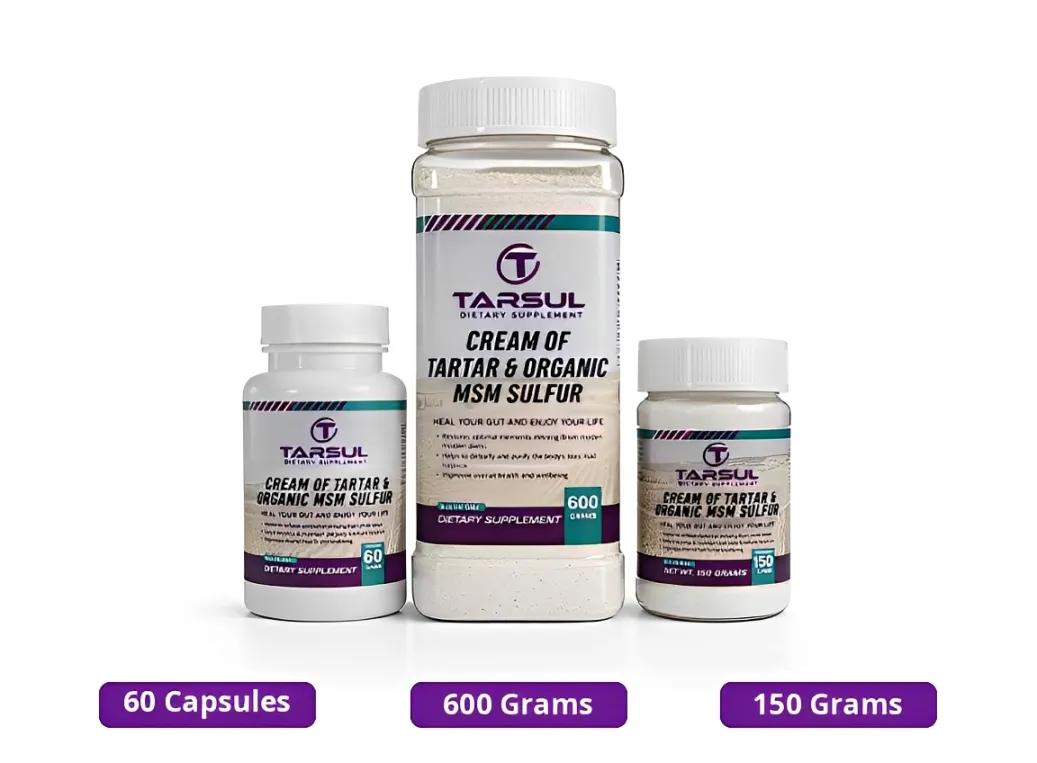
We’ll be straightforward here: Tarsul is not a UTI treatment, and we’re not going to pretend otherwise.
Tarsul combines cream of tartar, a natural source of potassium, with organic MSM sulfur. We include it in our own daily routine as general mineral support, not as a substitute for antibiotics or a proven fix for infection. Like any supplement, it can aid the cause as part of a broader routine of your urinary health, but it cannot replace the root treatment your body actually needs. If you’re comparing different UTI support supplements, it’s worth knowing exactly what each one is doing (and not doing) for your body before you add it to your routine.
We’ve also written more broadly about how these two ingredients fit into daily wellness in 16 Ways Tarsul Supports Whole-Body Wellness.
The Bottom Line
Good UTI care comes down to hydration, a few smart habits, and knowing when it’s time to call a doctor. Natural support has a real place in a daily routine, but it works best next to proper medical care, not instead of it.
FAQs
How can I help treat a urinary tract infection naturally?
Stay well hydrated, empty your bladder fully and often, and avoid holding urine for long stretches. These habits support your body while you get proper medical evaluation, especially if symptoms haven’t improved after a day or two.
Can you get rid of a UTI naturally, without antibiotics?
Mild irritation sometimes settles down with rest and extra water, but a confirmed bacterial infection usually needs antibiotics to actually clear. Waiting it out risks the infection spreading toward your kidneys, so don’t skip medical advice if symptoms stick around.
What can you take at home for a urine infection?
Water is genuinely your best tool, along with urinating frequently and cutting back on bladder irritants like caffeine and alcohol. Over-the-counter pain relief can take the edge off discomfort, but it won’t clear the bacteria causing the infection.
How long do UTIs last without treatment?
Mild cases sometimes clear up within a few days on their own, but many drag on for a week or longer and can get worse instead of better. Left alone, a bladder infection can progress into a kidney infection, which is a much more serious problem.
Will a UTI go away without treatment?
Sometimes, but it’s not something you want to bet on. If symptoms haven’t improved after 48 hours, or you notice fever or back pain, see a doctor instead of waiting it out. A simple bladder infection natural remedy isn’t a substitute for that kind of evaluation.
Medical Disclaimer
This article is intended for educational purposes only and should not be interpreted as medical advice, diagnosis, or treatment. Always consult a qualified healthcare professional regarding persistent symptoms or before beginning any new supplement regimen.
More on this topic: see the UTI and Urinary Symptom Information hub for the full set of related articles.
Related reading on this topic
- Natural Supplement for UTI
- Gut Health Supplement for UTI Prevention
- Natural Supplement for UTI in Women Over 50 and Menopause
- Natural Alternative to Antibiotics for UTI
- What is actually in Tarsul, and how it is taken
About this page — last reviewed September 2026
Published by Tarsul, a family-run dietary supplement company operating from San Diego, California since 2010. Written and reviewed in-house by Russ Guillemot, founder, drawing on fifteen years of direct correspondence with customers and wholesale accounts. We are not physicians and nothing here is a diagnosis or a course of treatment.
Where we reference published research we name the authors and the journal so you can look it up yourself. Where something is a common observation rather than a finding, we say so plainly. If a claim cannot be sourced, we leave it out.
Tarsul · 2307 Fenton Parkway #107-42, San Diego, CA 92108 · 619-500-4403 · info@tarsul.com
These statements have not been evaluated by the Food and Drug Administration. This product is not intended to diagnose, treat, cure, or prevent any disease.