
History • Ingredients • Today’s version
Sulfur and Cream of Tartar Tablets: History and Today’s Version
The old pharmacy tablets and lozenges are hard to find now. Here is what they were, why they faded, and how Tarsul pairs cream of tartar with MSM in capsules or powder.
See Tarsul Capsules and Powder →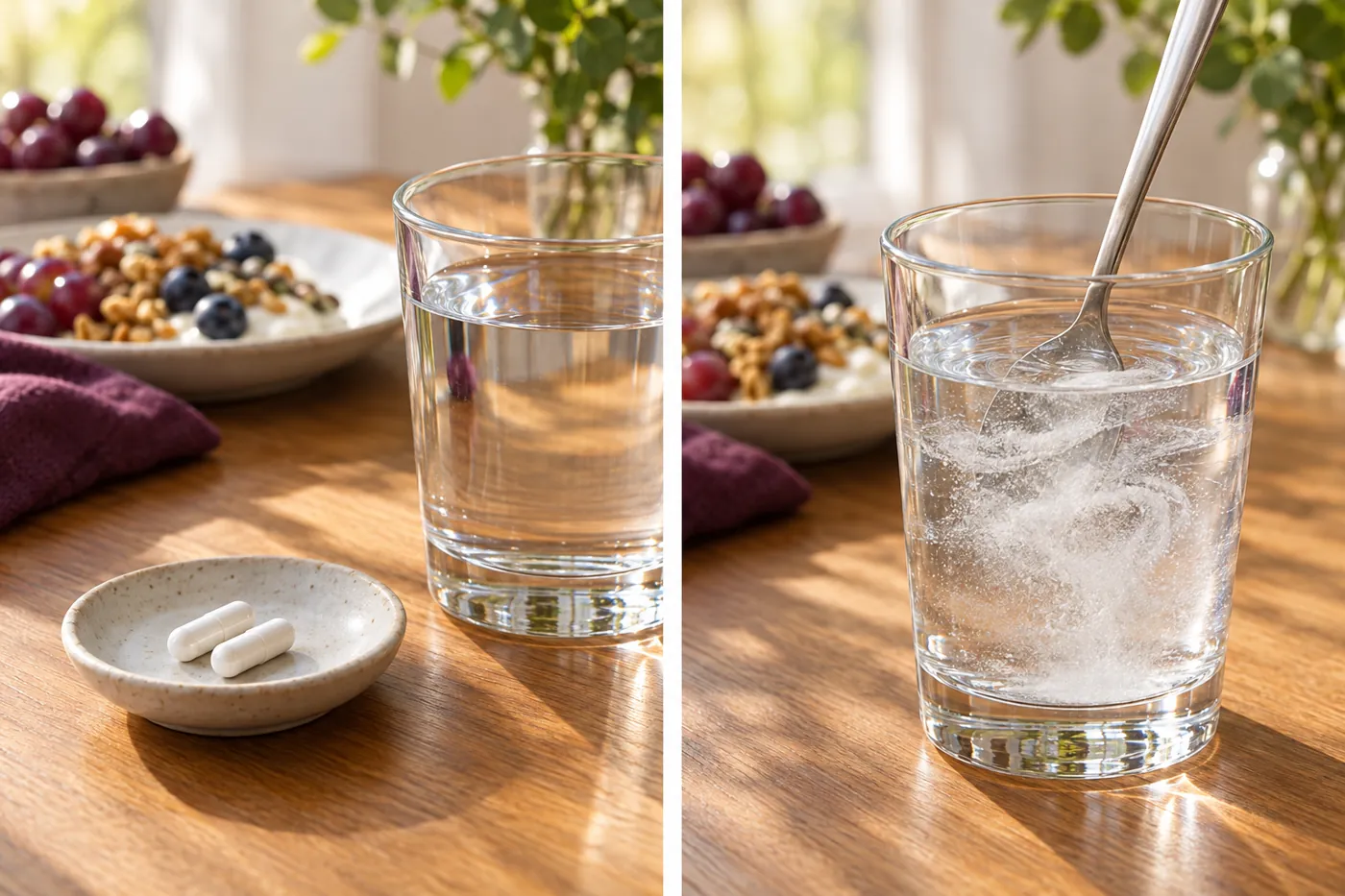
If you are searching for sulfur and cream of tartar tablets, there is a good chance someone in your family took them, or you remember them from an old pharmacy shelf. This page explains what those tablets were, why they are hard to find now, and how Tarsul fits for people who want the same two-part idea in a modern form.
Short answer: the classic sulfur and cream of tartar tablets and lozenges are no longer widely sold. Tarsul is not a copy of them. It pairs cream of tartar with MSM, a sulfur compound used in supplements today, and comes as capsules or powder rather than tablets. The capsules are Tarsul’s pill form; there is no separate tablet.
What Sulfur and Cream of Tartar Tablets Were
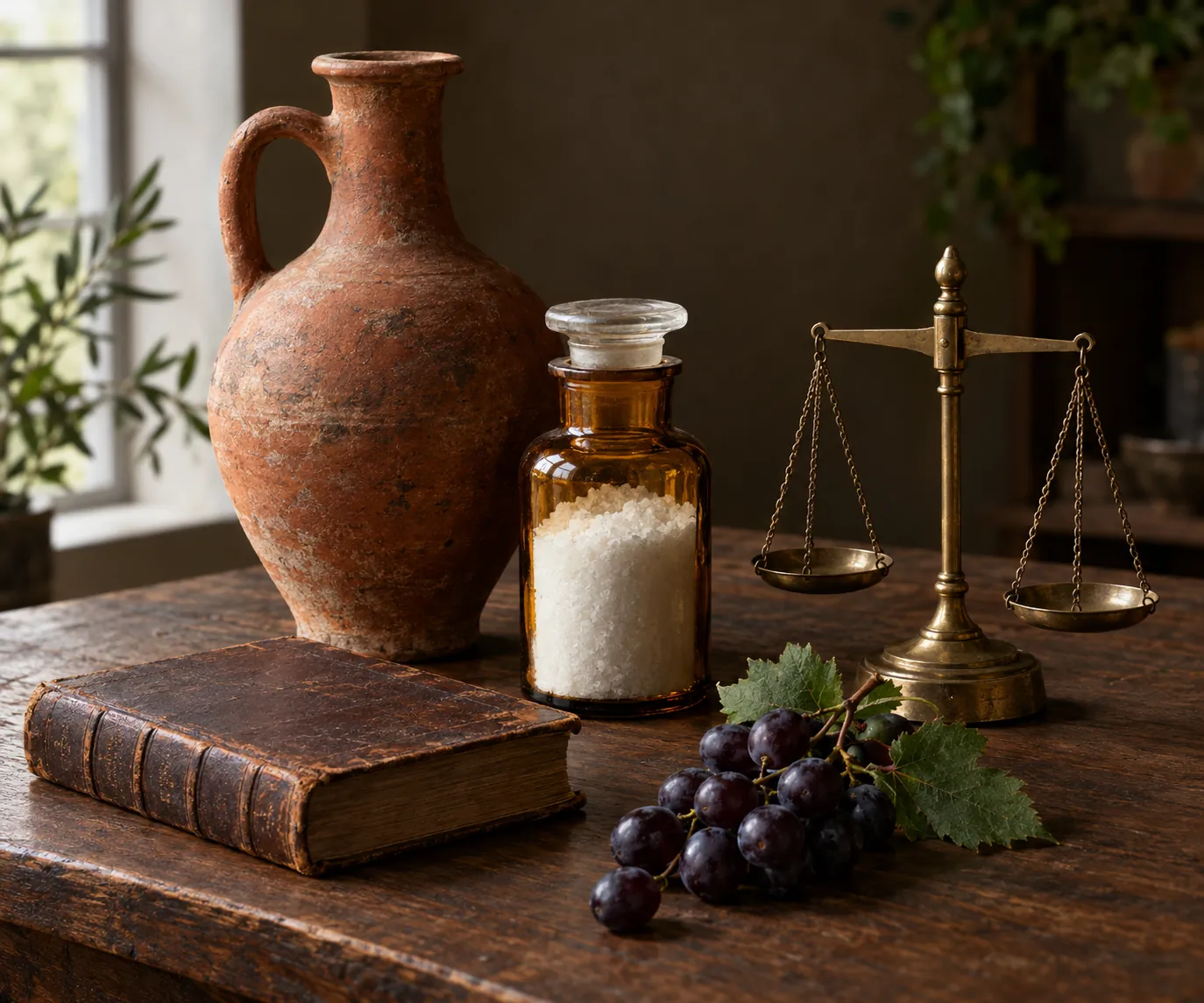
For much of the early 1900s, sulfur and cream of tartar was a standard pharmacy item. It was usually sold as small tablets or lozenges that combined two simple ingredients: elemental sulfur and cream of tartar (potassium bitartrate, the tart powder left behind when grapes ferment into wine).
Large drug makers produced them. The Smithsonian’s National Museum of American History holds a box of Sulphur and Cream of Tartar Lozenges donated by Sharp & Dohme in 1927, as part of a set of potassium preparations for an exhibit on well-known and extensively used drugs. A small museum on Pender Island, British Columbia, keeps a 1920s box of the same product made by Parke, Davis & Co.
How People Used Them
Families reached for them as a general spring tonic. The Pender Island museum’s record describes lozenges meant to soothe the throat that were also used as a mild laxative and to clear the skin and complexion. Many people remember a grandparent keeping a box in the cabinet for exactly those reasons.
Those were traditional uses, not proven medical results. Nobody tested old pharmacy lozenges the way modern products are studied, and we do not treat the history as evidence that sulfur and cream of tartar cures anything.
Why the Tablets Became Hard to Find
Over the 20th century, pharmacy shelves moved toward newer medicines, and old tonic-style products drew closer scrutiny from regulators. A 1950 FDA notice of judgment, preserved by the National Library of Medicine, records a case titled Misbranding of sulfur and cream tartar tablets against a Cincinnati maker; the company and its president pleaded guilty and were each fined $100.
The idea never disappeared entirely. A 1991 U.S. patent, US4985257A, describes a mixture of about 22 percent flowers of sulfur and 78 percent cream of tartar. That filing is part of the history of this combination. It is not Tarsul’s formula, and Tarsul is not a patented product.
Elemental Sulfur and MSM: What Is the Difference?
The old tablets used elemental sulfur, the yellow powder sometimes called flowers of sulfur or sublimed sulfur. Most sulfur supplements sold today use MSM (methylsulfonylmethane) instead.
- Elemental sulfur is the pure element. It still appears in some skin products, but it is far less common as a swallowed supplement than it once was.
- MSM is a sulfur compound found in small amounts in many foods. It is about one-third sulfur by weight, dissolves easily, and has been studied as a supplement; a 2017 review in Nutrients describes it as generally well tolerated.
- Cream of tartar is the same in both. By weight it is roughly one-fifth potassium, which is why the NIH potassium fact sheet is the right reference for how much makes sense.
So Tarsul keeps the cream of tartar at the center and uses MSM as its sulfur source. If you want the exact old pharmacy lozenge with elemental sulfur, Tarsul is not that product, and we would rather tell you plainly.
Tarsul: The Modern Version in Capsules or Powder
Tarsul contains two ingredients and nothing hidden: mostly cream of tartar, with a smaller amount of MSM. There are no fillers and no proprietary blend.
- Capsules: the closest thing to a tablet. Vegetarian capsules, 60 per bottle. The label direction is 4 capsules with water; some people use as few as 1 or as many as 8, depending on body size and response. See Tarsul 60 capsules.
- Powder: the same two ingredients, measured by the spoon. Half to one level teaspoon in 8 ounces of water or juice, one to three times a day. It tastes mildly tart. See Tarsul 150g powder.
Start at the low end of the label range and follow the label on the product in your hands. Our dosage and ingredients guide covers measuring, nutrition facts, and timing in detail.
Who Should Check with a Doctor First
Because cream of tartar supplies potassium, more is not better. Please talk with your doctor or pharmacist before you start if you have kidney disease, take an ACE inhibitor, an ARB, or a potassium-sparing diuretic, use a salt substitute, or are pregnant or nursing. Stop and seek care if you notice unusual weakness, tingling, or a racing or irregular heartbeat. The full list is on our dosage page.
Questions People Ask
Can I still buy sulfur and cream of tartar tablets?
The old branded tablets and lozenges are not in regular production. You may see antique boxes in museums or collector listings, but those are not for taking. Tarsul offers cream of tartar with MSM as capsules or powder.
Is Tarsul the same as the old tablets?
No. It shares the cream of tartar base, but it uses MSM rather than elemental sulfur, and it comes as capsules or powder, not pressed tablets.
Is sulfur and cream of tartar the same as sulphur and cream of tartar?
Yes. “Sulphur” is the older and British spelling; “sulfur” is the American spelling. The museum boxes mentioned above both say sulphur.
Does Tarsul treat skin problems or constipation?
Tarsul is a dietary supplement, not a treatment for any disease. People historically used sulfur and cream of tartar for those reasons, and we share that history honestly, but it is tradition rather than proof. For a skin condition or ongoing digestive trouble, a doctor is the right first stop.
A Note from Russ
Many of our customers found us the same way you did, looking for the sulfur and cream of tartar tablets they remembered. I started Tarsul in 2010, and the idea behind it is the same one you remember: cream of tartar with a sulfur source, kept simple. If you have questions about whether it suits you, write to us at info@tarsul.com or call 619-500-4403. Every order ships directly from us.
Russ Guillemot, Founder
This page is general information, written by Tarsul’s founder. It is not medical advice. These statements have not been evaluated by the Food and Drug Administration. This product is not intended to diagnose, treat, cure, or prevent any disease.